Cart
0
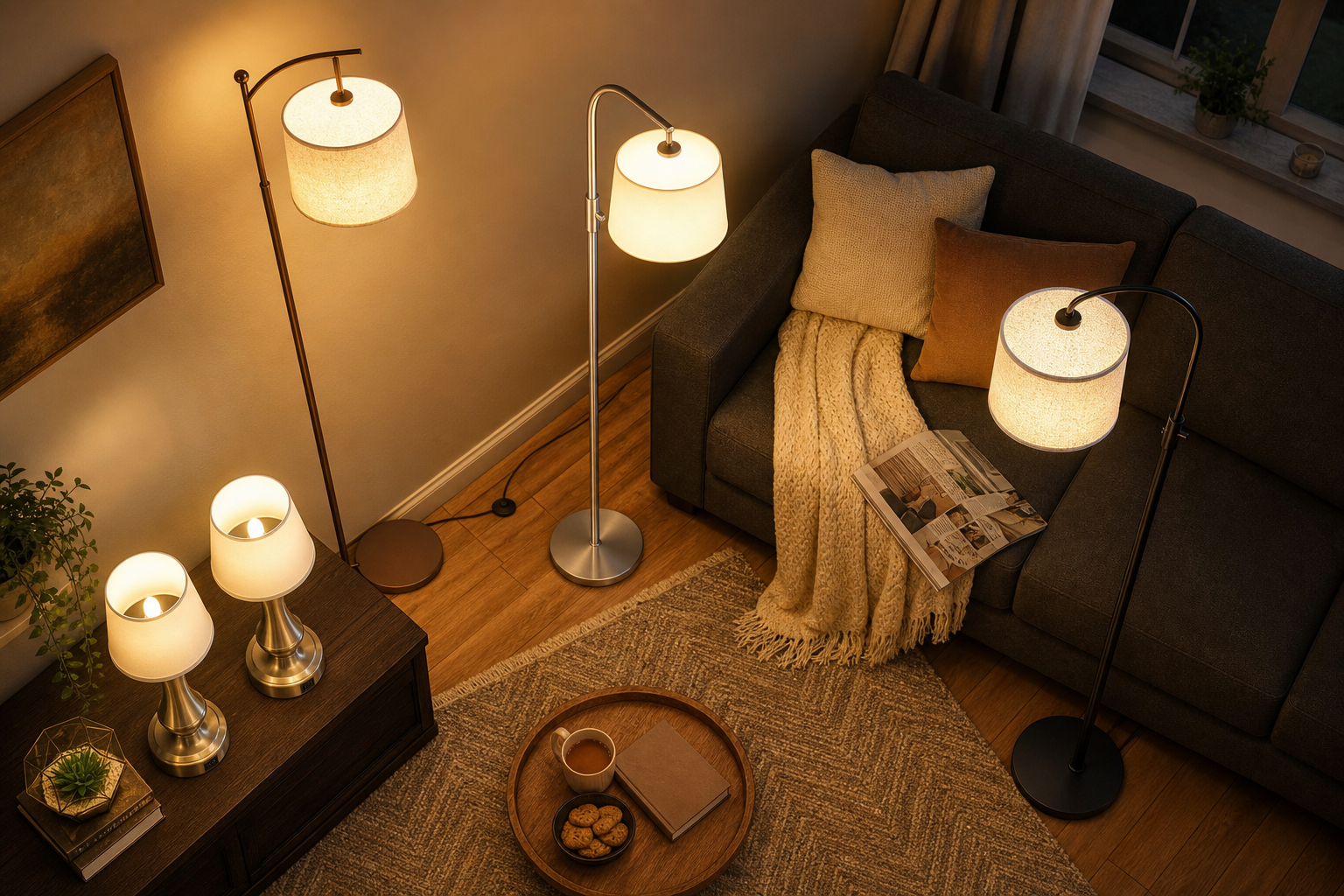
You've probably stood in front of a lamp listing, noticed it has a remote control, and thought: do I actually need that? Then you scrolled past it, bought the cheaper manual one, and spent the next six months leaning across your nightstand every time you wanted to dim the light before bed.
Lamp control styles have gotten genuinely interesting in the last few years — remotes, multi-level touch sensors, built-in USB ports — and the difference between a feature that improves your daily life and one you forget about in a week mostly comes down to where the lamp lives and how you actually use it. This guide breaks it down honestly, using four real lamps as concrete examples.
The Three Control Styles, Plainly Explained
Manual (rotary switch or inline cord switch): You twist a knob or click a switch on the lamp itself. Simple, never needs batteries, and never breaks in a way you can't fix. The trade-off is that you have to physically reach the lamp every time.
Touch control: Tap the base or body of the lamp to cycle through brightness levels. No switch to hunt for in the dark, no remote to lose. Works best when the lamp is close — on a nightstand, end table, or desk.
Remote control: Change brightness or color temperature from across the room. The obvious win for floor lamps you've already settled into the couch away from. The obvious loss: you will misplace the remote.
When a Remote Actually Earns Its Keep
Floor lamps placed beside a sofa or reading chair are the single best use case for a remote. Once the lamp is positioned, you don't want to stand up every time you switch from bright task lighting to a softer evening glow.
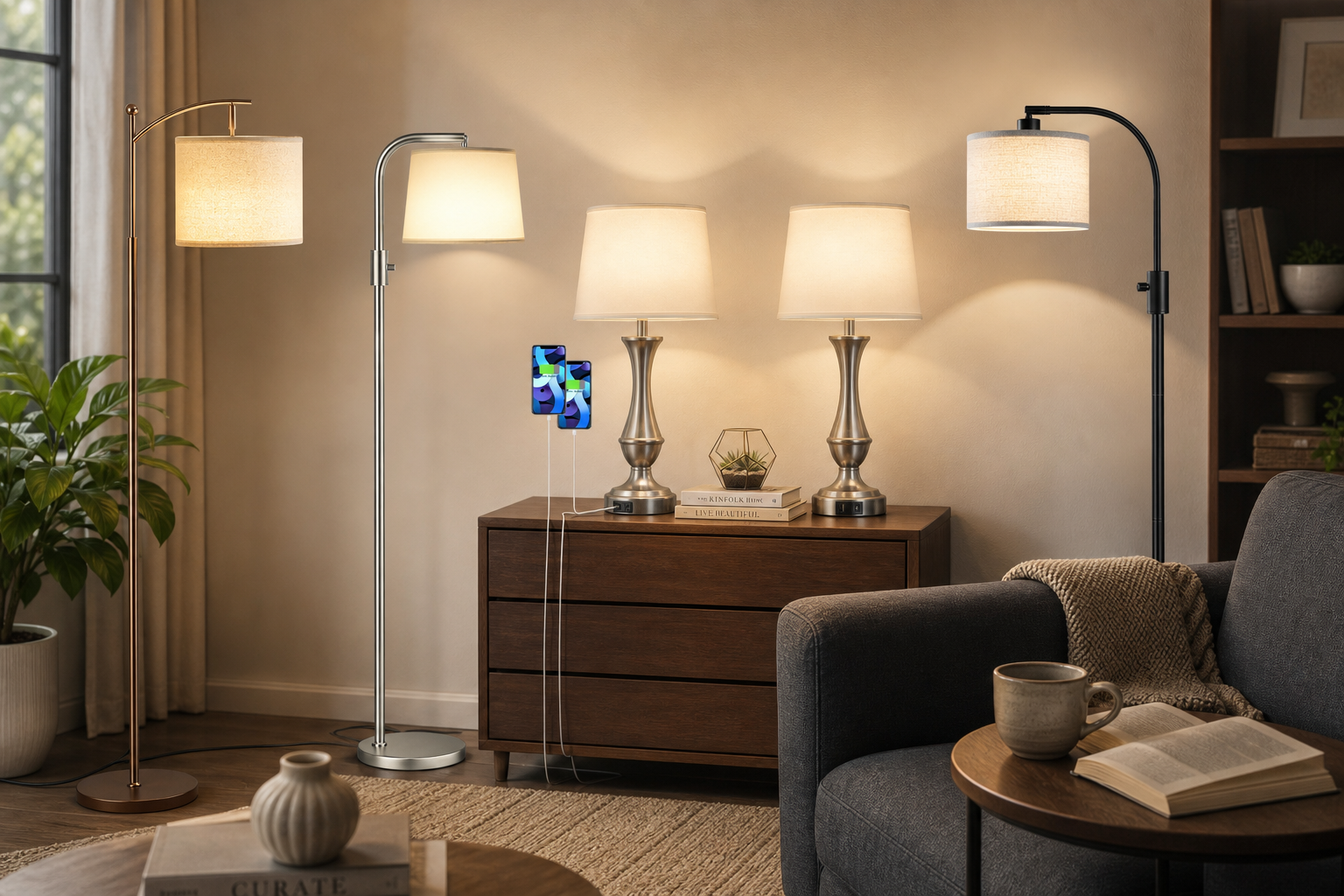
The 60'' Floor Lamp With Remote Control & Bulb, Colors Temperature & Brightness Adjustable, Deep Beige Shade & Brown Pole makes this case well. It's a tall arc-style lamp in a warm brown pole finish with a deep beige drum shade — the kind of lamp that anchors a living room corner — and it comes with a dedicated remote that handles both brightness and color temperature. That last part matters more than people expect: being able to shift from a cooler, cleaner light for reading to a warmer, amber tone for winding down is a meaningful quality-of-life upgrade, and doing it without leaving the couch is exactly what a remote is for.
The Ambimall arc lamp in a brushed silver finish and tapered beige shade (the Ambimall Floor Lamp with 9W LED Bulb) takes a slightly different approach — a sleek, contemporary arc with a clean modern silhouette that works equally well in a living room or bedroom. It's a good example of a lamp where the design itself does a lot of the work: the gentle arc and the slim profile mean it doesn't dominate the room, which makes it easier to place well.
When Touch Control Makes More Sense
Touch control shines on bedside lamps. You're not across the room — you're right there, half-asleep, and you just want to tap something once to drop the light to its lowest level. No fumbling for a switch in the dark, no remote sliding off the nightstand.
The Seealle Touch Lamps Set of 2 — 3 Way Dimmable Bedside Lamps with USB C+A is a strong example of touch control done right. The nickel-base, white-shade design is classic enough to work in almost any bedroom, and the three-way dimming means you have a genuinely useful range: bright for reading, medium for ambient light, low for winding down. The built-in USB-C and USB-A ports on the base are a practical bonus — your phone charges on the nightstand without adding another cable to the wall outlet. Buying them as a set of two means both sides of the bed match, which sounds like a small thing until you've lived with mismatched nightstand lamps.
Touch control on a floor lamp is less compelling. If the lamp is across the room, you still have to walk to it. For bedside use, though, it's genuinely the most intuitive option available.
The Arc Floor Lamp Case: Dimming Flexibility Over Everything
Arc floor lamps — the kind with a curved arm that positions the shade out over a seating area rather than straight up — have a specific job: they deliver focused, overhead-style light to a chair or sofa without requiring a ceiling fixture. For that job, dimming flexibility matters a lot, because the same lamp needs to work as task lighting for reading and as soft ambient light for watching TV.
The Nintiue Dimmable Arc Floor Lamp, 1200 Lumens LED Bulb, Matte Black-Beige Linen Shade is built around exactly that idea. The matte black finish and beige linen drum shade give it a clean, modern look that doesn't fight with existing furniture, and the 1200-lumen LED bulb means it has enough output for real task lighting — not just decorative ambiance. The dimming function lets you dial it back when you don't need full brightness. For a lamp positioned beside a reading chair, that range from full brightness to a soft glow is the whole point.
So Which Control Style Should You Actually Choose?
Here's the honest version:
- Remote control — best for floor lamps in living rooms, especially arc lamps beside a sofa. Worth it if you actually sit far from the lamp regularly. Annoying if you lose the remote constantly.
- Touch control — best for bedside table lamps. Intuitive, no batteries, works perfectly when the lamp is within arm's reach. Less useful on a floor lamp across the room.
- Manual dimming — totally fine for lamps you adjust infrequently, or lamps where you've paired a smart bulb that handles the dimming via an app or voice assistant instead.
The USB ports on the Seealle set are worth calling out separately: they're not a control feature, but they're the kind of practical addition that makes a lamp genuinely more useful day-to-day rather than just prettier. If your nightstand lamp is already plugged into an outlet, having charging ports built into the base just makes sense.
One Thing Worth Knowing Before You Buy
Color temperature control (warm white vs. cool white) is different from brightness control, and it's underrated. A lamp that only dims is useful. A lamp that dims and shifts from a cool daylight tone to a warm amber is noticeably better for rooms that serve double duty — a living room that's a workspace in the afternoon and a relaxation space in the evening, for example. If that describes your space, prioritize lamps that offer both, like the remote-controlled Ambimall arc lamp with its adjustable color temperature.
The right control style isn't the one with the most features. It's the one that matches how you actually live with the lamp. A remote you never pick up is just clutter. A touch lamp you tap twice a night is genuinely useful every single day.
Browse the full range of dimmable, touch-control, and remote-operated lamps at LightsDaddy — and use code WELCOME5 for 5% off your first order with free US shipping.
Frequently Asked Questions
Can I use a smart bulb in a lamp that already has a remote control?
Technically yes, but you'll run into conflicts. Smart bulbs need to stay powered on at all times to respond to app or voice commands — if the lamp's own dimmer switch or remote cuts power to the socket, the smart bulb loses its connection. For best results, pick one control method: either use the lamp's built-in dimmer with a standard bulb, or use a smart bulb with the lamp's switch always left in the on position.
What's the difference between a 3-way dimmable lamp and a fully dimmable one?
A 3-way lamp cycles through three fixed brightness levels — typically low, medium, and high — with each tap or click. A fully dimmable lamp lets you slide the brightness to any point along a continuous range. For most bedside and ambient uses, three levels is plenty. For task lighting where you want precise control, a continuously dimmable lamp is more versatile.
Do touch lamps interfere with each other if two are on the same nightstand or in the same room?
Touch lamps respond to the electrical capacitance of your body, not to signals from other lamps, so two touch lamps in the same room won't accidentally trigger each other. In rare cases, very old or unusual wiring can cause sensitivity issues, but this is uncommon in standard US residential wiring.
What should I look for in a floor lamp for a room with no overhead lighting?
Prioritize lumen output (higher lumens mean more light output), an adjustable or arc-style head so you can direct light where you need it, and a dimming option so the same lamp works for both bright task lighting and softer evening ambiance. A lamp with color temperature control is an added bonus for rooms that shift between work and relaxation use throughout the day.