Cart
0
You've probably grabbed a desk lamp off a shelf, plugged it in, and called it done. It works, the light comes on, and that felt like enough. But if you're squinting by 9 p.m., getting headaches during long reading sessions, or your desk looks like a cable graveyard, the lamp itself might be part of the problem.
This isn't a pitch for expensive lighting. It's a straight comparison between a conventional incandescent or basic LED desk lamp and a modern dimmable LED lamp — specifically the Baseus LED Desk Lamp Eye Protection Study Dimmable Office Light Foldable Table Lamp Smart Adaptive Brightness Bedside Read Lamp — so you can decide whether the difference actually matters for how you use your desk.
The Light Itself: Fixed vs. Adjustable
A standard desk lamp gives you one thing: light on or off. The bulb is either burning at full brightness or it isn't. That's fine for a quick task, but it's genuinely uncomfortable for two-hour reading sessions, late-night work, or anything where the room light shifts around you.
The Baseus lamp is dimmable, which sounds like a minor convenience until you actually use it. Being able to dial down the brightness at 11 p.m. — so you're not blasting your eyes with the same intensity you used at noon — reduces the kind of visual fatigue that builds quietly over a long session. The lamp also uses LED bulbs, which produce consistent, flicker-free light. Older fluorescent or incandescent bulbs can flicker at a rate too fast to consciously notice but fast enough to tire your eyes over time. LED eliminates that.
The Baseus also carries CE, FCC, and ROHS certifications, which means it's been tested against established safety and electromagnetic standards — something a no-name budget lamp often skips.
Controls: Knob and Switch vs. Touch
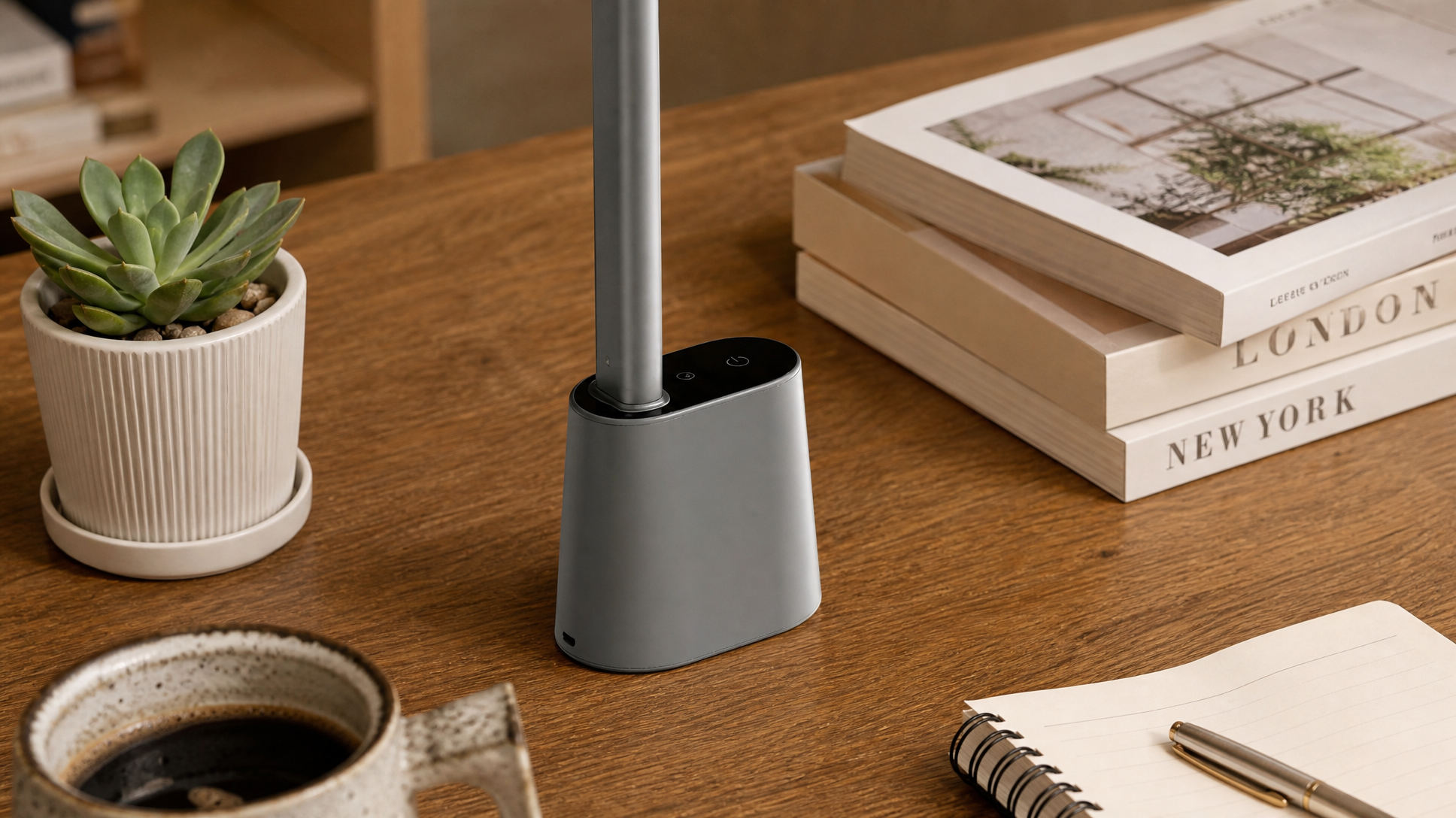
Conventional lamps use a rotary knob, a pull cord, or a simple on/off switch. Nothing wrong with that. But a touch switch — which the Baseus uses — means no moving parts to break, no awkward reaching around the shade, and a cleaner look on the desk. One tap to turn on, hold to dim. It's a small thing that you notice every single time you use the lamp.
The Footprint Question: Why It Matters for Small Desks
If you're working with a compact desk — a student desk, a corner setup, a bedroom nightstand doubling as a workspace — the physical form of your lamp matters more than people admit. A traditional gooseneck or swing-arm lamp with a wide base and a bulky shade takes up real estate and tends to tip if you brush the cord.
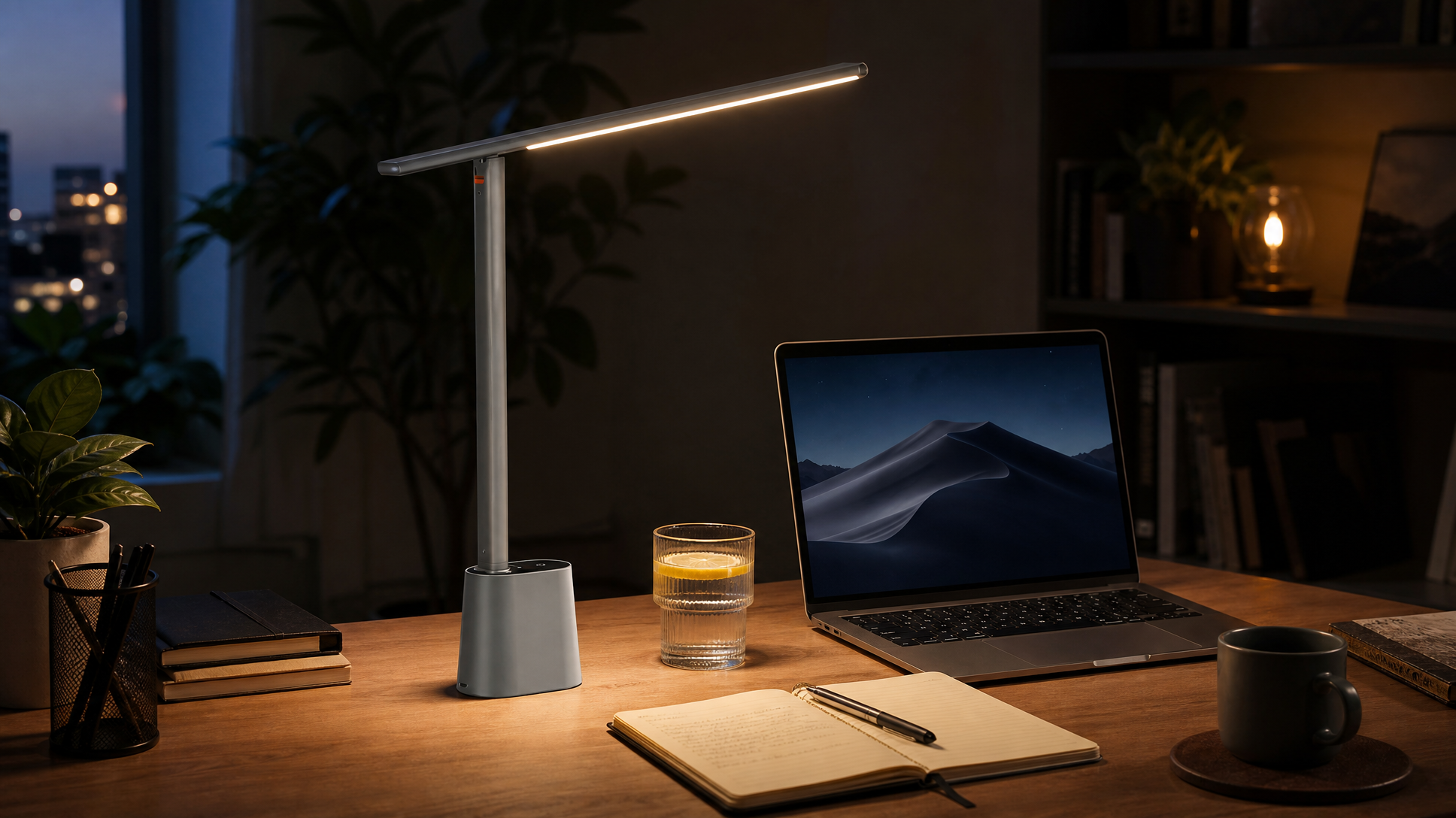
The Baseus has a slim, upright profile with a long horizontal LED bar at the top and a compact cylindrical base. Looking at the lamp in the photo, the base is narrow enough to sit beside a glass or a phone without crowding the surface. The body is aluminum and ABS/PC plastic in a matte grey finish — it doesn't look like an afterthought on a modern desk. The arm folds, which matters when you need to pack it away or adjust the angle without repositioning the whole lamp.
For anyone searching for lamps for small spaces, this form factor is genuinely more practical than a traditional shade lamp. You get wide, even light distribution from the horizontal bar without a dome shade hanging over your work area.
Eye Strain: Real Difference or Marketing Talk?
The honest answer: the lamp itself doesn't fix eye strain — your habits do. Taking breaks, keeping the screen at a reasonable distance, and not working in a completely dark room all matter more than any single product. That said, lighting quality does play a real role. The National Eye Institute notes that poor lighting contributes to eye fatigue, particularly when there's a sharp contrast between a bright screen and a very dim or very bright ambient environment.
A dimmable LED lamp lets you match your desk light to the room and to the task — brighter for detailed work, softer for reading, very low for winding down. A fixed-brightness lamp can't do that. Whether that's worth it depends entirely on how long you actually sit at your desk and what you're doing there.
When a Standard Lamp Is Fine
Not every situation calls for an upgrade. If you use your desk lamp for fifteen minutes a day to find something in a drawer, a basic lamp is completely adequate. If you already have great overhead lighting and just need a small supplement, a simple LED bulb in a cheap fixture does the job.
The Baseus lamp earns its place when you're at a desk for extended stretches — studying, writing, working from home — especially in the evening when you want control over how much light you're taking in. It also makes sense if desk space is tight, the aesthetic of your setup matters to you, or you're tired of hunting for the switch in the dark.
A Quick Side-by-Side
- Light control: Standard lamp — fixed brightness. Baseus — dimmable via touch.
- Light source: Standard lamp — incandescent or basic LED. Baseus — LED with consistent, flicker-reduced output.
- Footprint: Standard lamp — often wider base, bulky shade. Baseus — slim upright profile, compact base, foldable arm.
- Controls: Standard lamp — rotary or pull switch. Baseus — touch on/off and dimming.
- Certifications: Standard lamp — varies widely. Baseus — CE, FCC, ROHS certified.
- Best for: Standard lamp — occasional, short-use tasks. Baseus — long sessions, small desks, evening work.
The Bottom Line
The gap between a standard desk lamp and a dimmable LED like the Baseus isn't about prestige — it's about whether you actually need the control. If your desk sessions are long, your space is limited, or you've noticed your eyes feeling worn out by the end of the day, the functional differences here are real and they add up over time. If you use a desk lamp for five minutes in the morning, save your money.
For everyone in between — and that's most people with a home office or study setup — the Baseus sits in a practical middle ground: not overbuilt, not a throwaway, and genuinely suited to the way people actually work now.
See the Baseus LED Desk Lamp at LightsDaddy and check current availability. You can also browse the full LightsDaddy collection if you want to compare it against other desk and task lighting options.
Frequently Asked Questions
Is a dimmable desk lamp actually better for your eyes than a regular one?
Dimmable lighting helps because it lets you match the lamp's brightness to your environment and the time of day. A fixed-brightness lamp can create sharp contrast between your desk and the rest of the room, which contributes to visual fatigue over long sessions. That said, no lamp eliminates eye strain on its own — regular breaks and screen distance matter just as much.
What does ROHS certification mean on a desk lamp?
ROHS (Restriction of Hazardous Substances) is a European Union directive that limits the use of certain hazardous materials — like lead and mercury — in electrical and electronic equipment. A ROHS-certified lamp has been tested to confirm it meets those material restrictions, which is a basic safety and environmental benchmark worth looking for.
Can the Baseus desk lamp work as a bedside reading lamp as well?
Yes — the dimmable touch control and slim profile make it a practical bedside lamp too. You can keep it at low brightness for reading without disturbing someone else in the room, and the touch switch means you don't have to fumble for a knob in the dark. The foldable arm also lets you angle the light away from your face if needed.
What should I look for in a desk lamp for a small desk or tight workspace?
Prioritize a narrow base, a foldable or adjustable arm, and a light bar or shade that distributes light widely without hanging over your work area. Avoid lamps with wide circular bases or large dome shades — they eat into usable desk space quickly. A USB or DC-powered lamp (rather than a bulky plug) also helps keep the cable situation manageable on a compact surface.