Cart
0

Your garage lighting is probably the worst lighting in your house
You've upgraded the kitchen, swapped out the bathroom vanity light, maybe even hung a chandelier in the dining room. But the garage? Still running on one bare bulb screwed into a socket from 1987, casting a yellowish shadow over exactly the spot where you're trying to read a torque spec.
The good news: you don't need to call an electrician, cut drywall, or run new wire to fix it. Every upgrade on this list is a plug-in, hang-up, or stick-on install — the kind of thing you can knock out on a Saturday morning and actually use that afternoon.
1. Plug-In LED Shop Lights
This is the fastest, highest-impact upgrade most garage owners skip. A plug-in LED shop light — the long, linkable kind — hangs from the ceiling joists with hooks and chains, plugs into any standard outlet, and immediately floods the whole bay with bright, even light. No junction box. No wiring. Just hang it and plug it in.
The real trick is chaining multiple fixtures together. Most plug-in shop lights have a daisy-chain port, so you can run two or three fixtures off a single outlet without any additional wiring. One outlet, three times the coverage. That's the move for a two-car garage or a long workshop bench run.
Look for fixtures with a high lumen output and a color temperature in the cool-white range (around 5000K is a common choice for task spaces) — that's the light that makes it easier to see detail, read labels, and spot the difference between a 10mm and an 11mm socket before it's too late.
2. Motion-Sensor Ceiling Fixtures
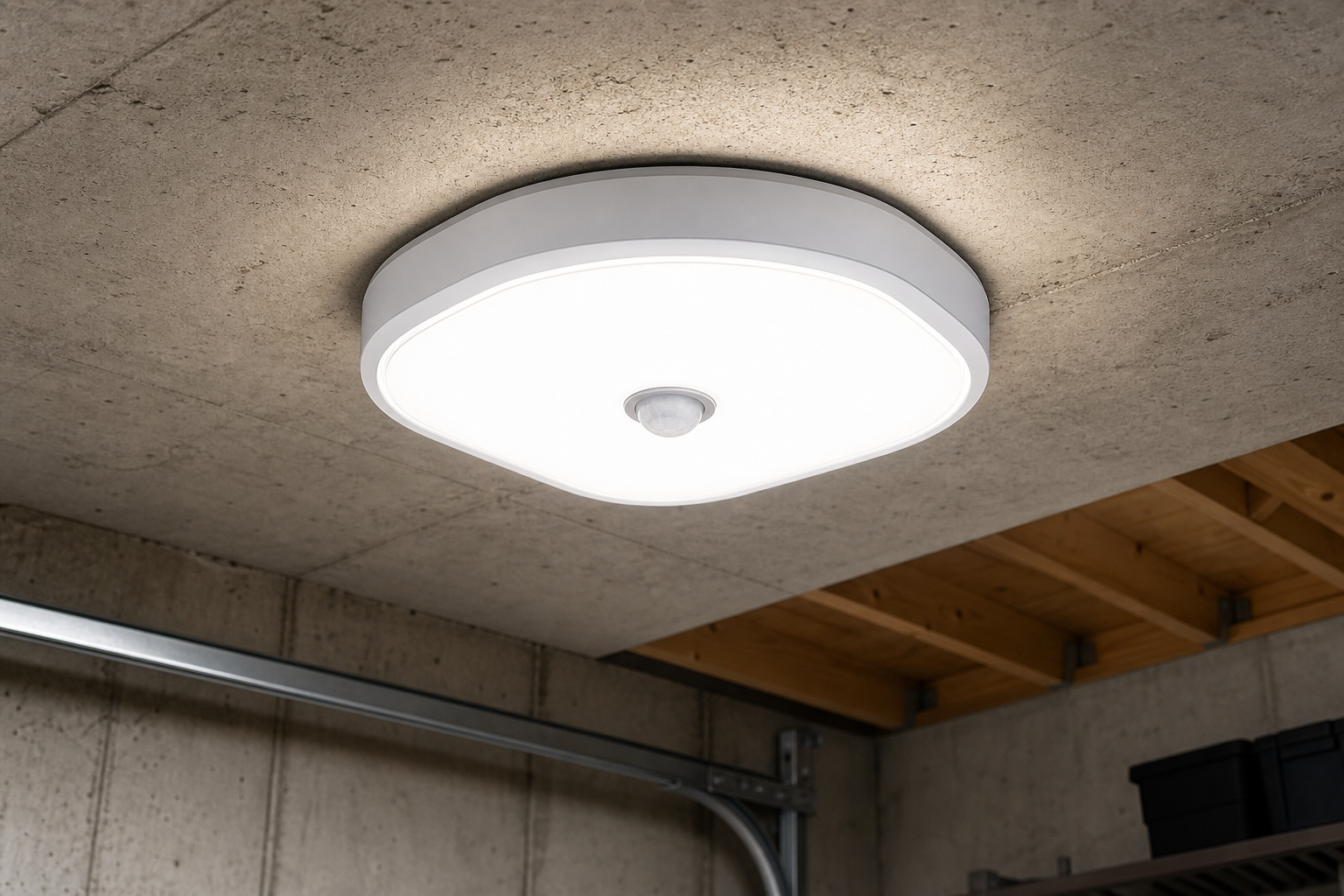
If your garage has an existing light socket — even just a bare bulb socket in the ceiling — a motion-sensor ceiling fixture screws right in. No new wiring, no switch to add. The fixture draws power from the socket and handles the on/off automatically based on motion.
This is especially useful for garages where you're constantly walking in with your hands full. The light comes on when you pull in, stays on while you're working, and shuts off after you leave — no fumbling for a switch, no lights left on all night. LightsDaddy carries options like the GUARANTLED LED Motion Sensor Ceiling Light, which fits this exact use case: screw-in install, built-in sensor, done.
One thing to check before you buy: make sure the fixture is rated for the socket type you have (E26 is standard in most US homes). If your garage has a pull-chain socket, these fixtures work there too — the motion sensor takes over from the chain once the socket is switched on.
3. Rechargeable LED Ceiling Lights for Spots Without Any Outlet
Got a corner, a storage alcove, or a detached shed with zero electrical access? Rechargeable LED ceiling lights solve this completely. You mount the fixture, charge it via USB, and you're done. No wiring, no outlet needed at all.
The SURAIELEC Rechargeable Ceiling Light (8000mAh) is a good example of what this category can do — a large internal battery means you're not recharging it every other day, and the fixture mounts to the ceiling or wall without any electrical work. It's a legitimate lighting solution for spaces that would otherwise require a licensed electrician to light properly.
These work best as targeted fixtures rather than primary room lighting — think: the area above your tool chest, the corner where you keep paint supplies, or the ceiling of a small shed. For whole-garage illumination, pair one of these with a plug-in shop light and you've covered every corner.
4. Magnetic LED Work Lights
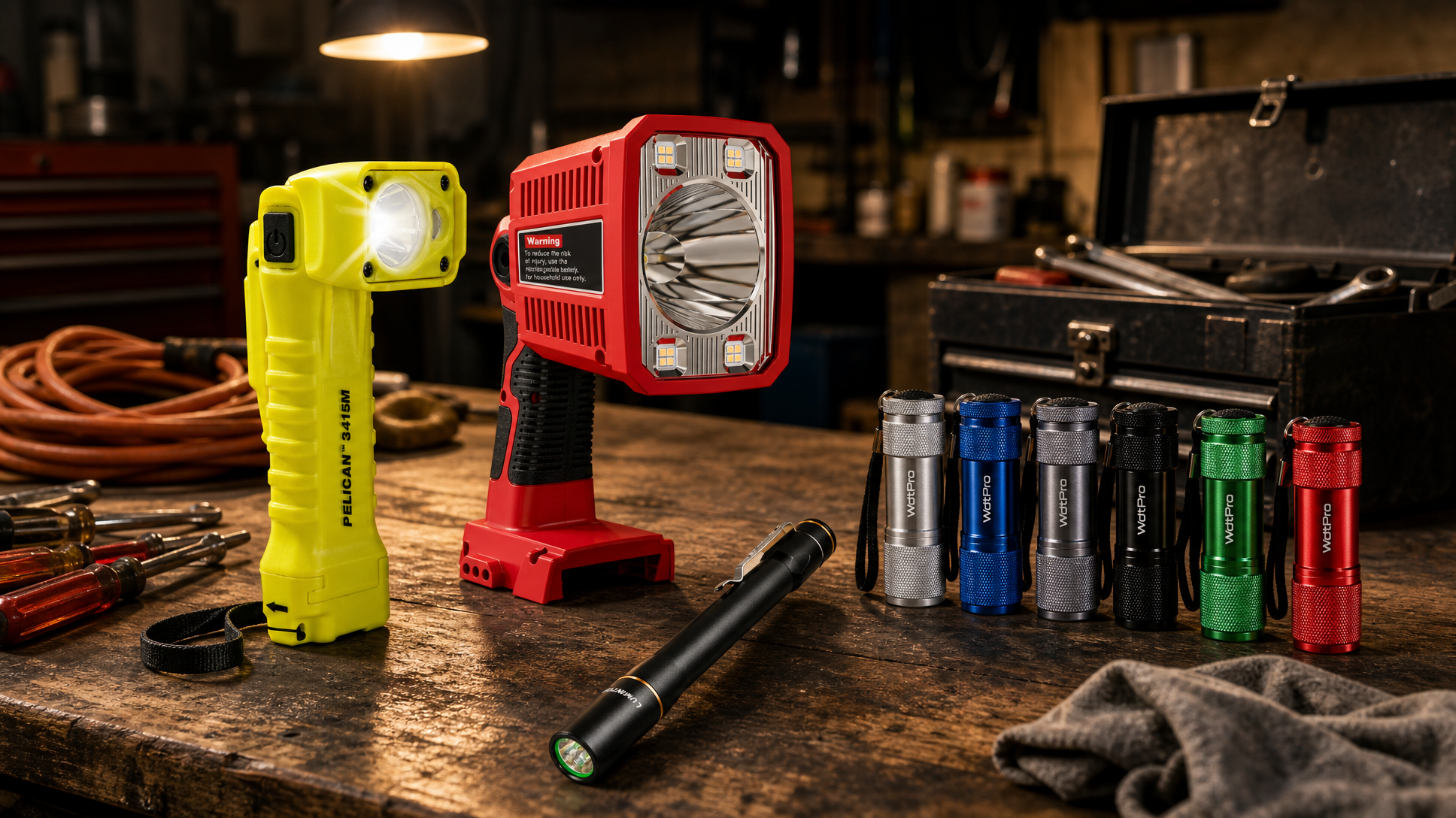
Every garage needs at least one of these, and most people don't realize how much they've been missing until they have one. A magnetic LED work light sticks to any metal surface — the side of your car, a tool cabinet, the underside of a hood — and gives you focused, bright light exactly where you're working, not just overhead.
This isn't about replacing ceiling lighting. It's about the moments when overhead light creates a shadow right where you need to see: under the car, inside an engine bay, behind a cabinet. A magnetic work light eliminates that shadow instantly. Most are rechargeable, so there's no cord to manage. Some pivot or articulate so you can angle the beam precisely.
Keep one charged and on your workbench. You'll use it more than you expect.
5. LED Strip Lights for Under-Shelf and Task Lighting
Overhead lighting, even good overhead lighting, leaves your workbench surface in relative shadow because your own body blocks the light from above. Under-shelf LED strips fix this by putting the light source right at the point of work — shining directly onto the bench surface from the underside of the shelf above it.
Installation is peel-and-stick for most strips, with an adhesive backing that bonds to the underside of a shelf or cabinet. Power comes from a USB adapter or a small plug-in transformer. No wiring, no drilling (usually), no electrician. If you want to go further, dimmable strips let you dial the brightness up for detailed work and down when you just need ambient light in the space.
For a deeper look at what to look for before buying — connector types, IP ratings for damp spaces, and how to calculate how much strip you need — the LED Strip Lights Buying Guide covers it in detail.
Put It All Together
You don't have to do all five at once. Start with plug-in shop lights if your garage is just generally dim. Add under-shelf strips if your bench work is suffering. Grab a rechargeable fixture for any dark corner that has no outlet nearby. Layer them as your projects and budget allow.
The point is that none of this requires a permit, a licensed electrician, or a weekend of drywall work. It's all hang-it-and-use-it stuff — which means you can actually do it, not just plan to do it.
Ready to start? Browse garage and workshop lighting at LightsDaddy — from motion-sensor ceiling fixtures to LED strip kits, it's all in one place.
Frequently Asked Questions
Do I need a special outlet to run plug-in shop lights in my garage?
Most plug-in LED shop lights run on a standard 120V household outlet, which is what you'll find in the majority of US garages. If your garage only has a 240V outlet (typically used for large power tools or EV chargers), you'll need a standard outlet nearby — but for most setups, any regular wall outlet works fine.
Can LED strip lights handle a garage environment — dust, temperature swings, occasional moisture?
It depends on the strip's IP (Ingress Protection) rating. For a typical enclosed garage, a basic strip is usually fine for under-shelf use away from direct moisture. If you're mounting strips near a garage door opening, a utility sink, or anywhere that gets damp, look for a strip with at least an IP65 rating, which means it's protected against water spray. The adhesive backing also holds better on clean, dry surfaces — wipe the shelf underside before sticking.
How long does a rechargeable LED ceiling light actually last on a single charge?
Battery life varies by fixture, brightness setting, and how often the light is triggered. A larger internal battery (like the 8000mAh in the SURAIELEC fixture) generally means longer runtime between charges, but the exact hours depend on usage patterns. Check the product specs for the specific fixture you're considering — most listings include an estimated runtime at different brightness levels.
Will a motion-sensor ceiling fixture work if my garage socket is on a switch?
Yes — just leave the wall switch in the ON position so the socket always has power. The motion sensor in the fixture then handles all the on/off control automatically. If you turn the switch off, the fixture loses power and the sensor can't function, so the key is keeping the socket live and letting the fixture do the switching.