Cart
0
Most people swap out a couple of bulbs, feel good about it, and move on. Then the electricity bill arrives and nothing looks different. That's because energy-efficient lighting isn't one decision — it's a series of smaller ones that compound room by room, and most of the advice out there skips the nuance that actually matters.
This guide walks through the real levers: bulb type, fixture choice, and lighting controls. It also calls out the changes that sound impactful but barely move the needle, so you can spend your time and money on what works.
Start With the Bulb — But Don't Stop There
If you're still running incandescent bulbs anywhere in your home, replacing them with LEDs is the single highest-return move you can make. LEDs use significantly less energy than incandescents to produce the same amount of light — that's well-established, not marketing. The U.S. Department of Energy has documented this repeatedly, and the savings are real and measurable on your monthly bill.
But here's where most guides stop, and where the real decisions begin. Not all LEDs are equal. A cheap LED that runs hot, flickers, or produces a color temperature that makes your living room feel like a hospital break room is not a win. Look for LEDs with a color rendering index (CRI) of 80 or above for living spaces — that's the number that tells you how accurately colors appear under that light. For kitchens and bathrooms where you need to see clearly, aim higher.
Color temperature matters too. Warm white (around 2700K–3000K) suits bedrooms and living rooms. Cooler, brighter light (4000K and above) works better in garages, workshops, and task-heavy spaces. Getting this wrong doesn't cost you money, but it does mean you'll replace the bulb again sooner than you should — and that's waste in its own right.
Room by Room: Where the Savings Actually Come From
Kitchen
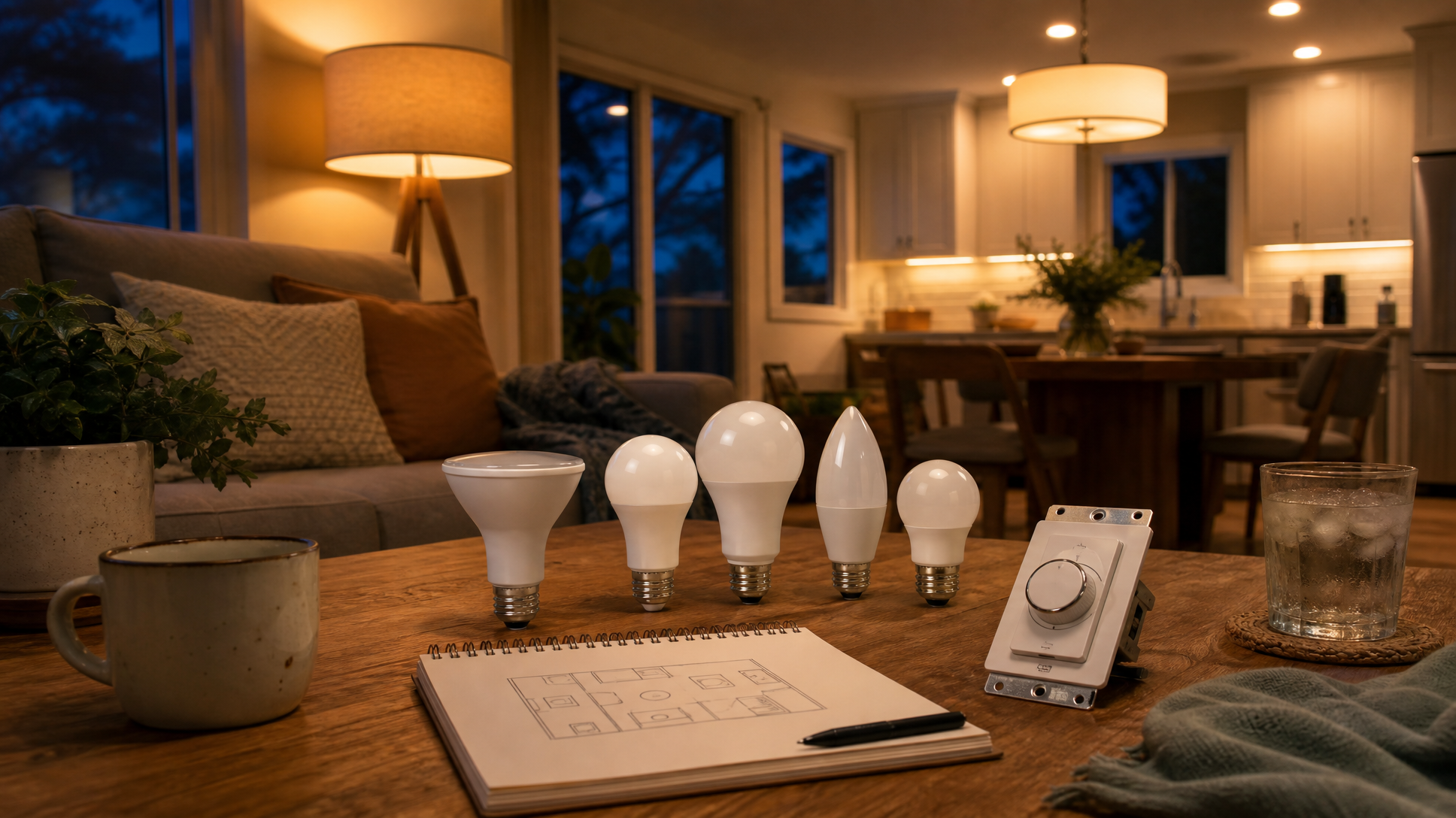
Kitchens are often the highest-use room for lighting in a home. Under-cabinet LEDs for task lighting let you turn off the overhead fixture when you don't need it at full blast. Recessed LED downlights on a dimmer are a practical upgrade here — dimmers don't just create ambiance, they reduce energy draw when you don't need full brightness. One thing to check: not every LED bulb is dimmable, so confirm compatibility before you buy.
Living Room
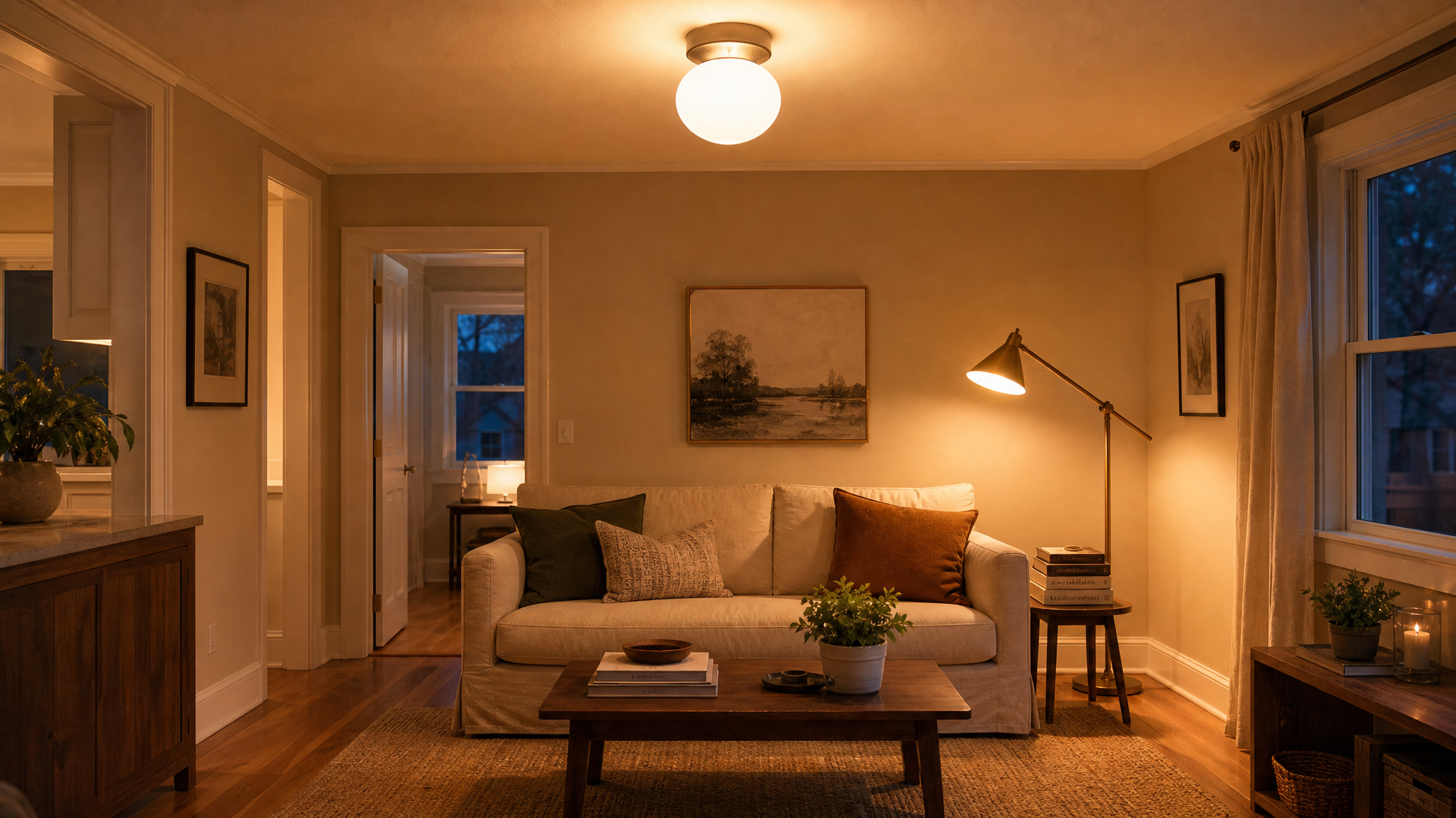
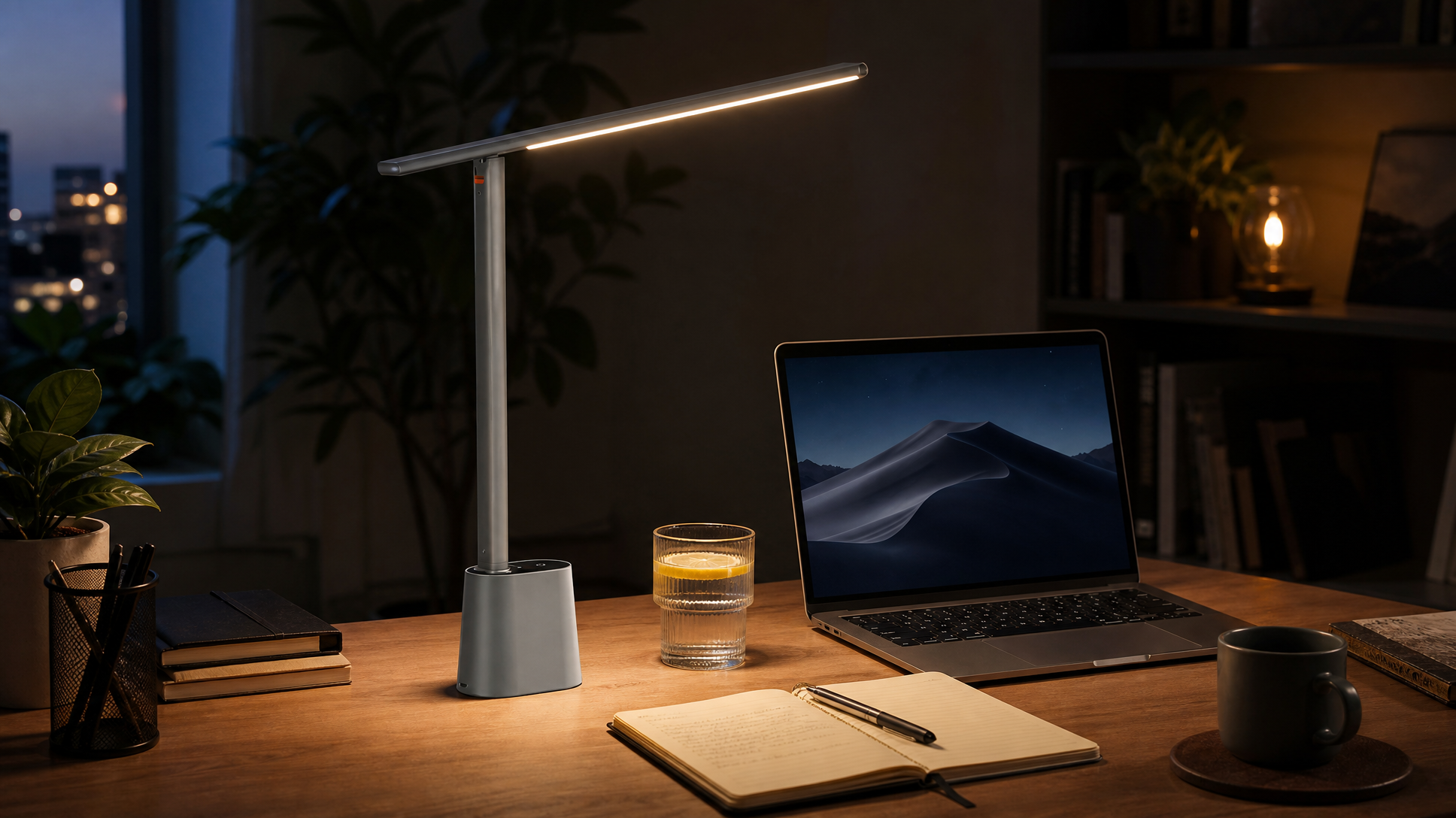
This is where people tend to over-light. A single ceiling fixture blasting the whole room when you're watching a movie or reading in one corner is inefficient. Layer your lighting instead — a floor lamp or table lamp for ambient light, a dedicated reading lamp for task light — and you'll run far fewer watts than one large fixture doing all the work badly. Smart bulbs with scene settings can help here, though they carry a price premium that takes time to recoup.
Bedroom
Bedrooms are relatively low-energy rooms to begin with, so don't overthink it. A dimmable LED in the ceiling fixture and a low-wattage lamp on the nightstand covers most people's needs. The bigger opportunity is making sure lights aren't left on — a simple smart switch or a plug-in timer on lamps costs very little and eliminates the habit of leaving lights running when you leave the room.
Bathroom
Vanity lighting is often the culprit in bathrooms. Older vanity bars with multiple bulb sockets can run high wattages if they're still fitted with incandescents or halogens. Swapping those to LEDs is straightforward and the savings add up quickly because bathroom lights tend to be switched on and off many times a day. Make sure the replacement bulbs are rated for enclosed fixtures if your vanity has a cover — not all LEDs are, and running an incompatible bulb shortens its life significantly.
Garage and Outdoor Spaces
These are the rooms where motion sensors earn their keep. A garage light that's on for hours because someone forgot to flip the switch is pure waste. Motion-sensor LED ceiling lights — like the kind of rechargeable, sensor-equipped fixtures available in LightsDaddy's home lighting range — mean the light is on only when someone's actually there. Outdoors, the same logic applies: motion-activated floodlights and path lights on timers beat leaving porch lights burning all night.

What Doesn't Move the Needle (As Much As You'd Think)
Smart bulbs get a lot of attention, and they're genuinely useful for convenience and scheduling. But if you're buying them purely for energy savings, the math is slower than most people expect. Smart bulbs cost significantly more than standard LEDs, and the energy difference between a standard LED and a smart LED running the same hours is small. Buy them for the lifestyle features — automation, color changing, voice control — not as a primary efficiency play.
Novelty and decorative lighting — Edison-style filament LEDs, color-changing strips in low-traffic areas — have almost no impact on your bill in either direction because they're typically low-wattage and used infrequently. They're fine to have; just don't count them as an efficiency win.
And ceiling fan light kits? Replacing the bulbs matters, but the fan itself is the bigger energy story. A ceiling fan used correctly (counterclockwise in summer, clockwise in winter at low speed) can reduce how hard your HVAC works. The lighting is almost secondary.
The Controls Question: Dimmers, Timers, and Sensors
Controls are underrated. A room full of perfectly chosen LED bulbs that are left on all day saves less than a room with decent bulbs on a motion sensor or timer. The hierarchy, roughly, is:
- Motion sensors — best for spaces where lights are frequently forgotten (garages, hallways, bathrooms in shared homes, outdoor fixtures).
- Timers and smart switches — best for exterior lights, porch lights, and any lamp that follows a predictable schedule.
- Dimmers — best for living rooms, dining rooms, and bedrooms where you actually vary the light level throughout the day.
You don't need all three everywhere. Pick the control that matches the actual behavior in that room, not the most sophisticated option available.
A Note on Bulb Disposal
LED bulbs don't contain mercury, which makes them simpler to dispose of than compact fluorescent (CFL) bulbs. That said, they still contain electronic components and small amounts of metals, so they shouldn't go straight into household trash if you can avoid it. Many hardware stores and municipal recycling programs accept spent LEDs — worth a quick check in your area before you toss them.
If you have old CFLs to replace (and you should, since LEDs outperform them on efficiency and lifespan), treat those as hazardous waste and use a proper drop-off location. The EPA maintains guidance on safe CFL disposal.
The Honest Bottom Line
The biggest gains come from three things done consistently: replacing remaining incandescents and halogens with quality LEDs, adding motion sensors or timers in rooms where lights are commonly left on, and choosing the right fixture for the job rather than the brightest one available. Everything else — smart bulbs, decorative lighting, color temperature optimization — is a refinement on top of that foundation, not a substitute for it.
If you're ready to work through your home room by room, browse LightsDaddy's full range of LED bulbs and energy-saving fixtures — from bulbs and ceiling fans to outdoor and motion-sensor options — and start with the rooms where your lights run the longest. That's where your bill will actually change.
Frequently Asked Questions
Do LED bulbs really last as long as the packaging claims?
Rated lifespan figures assume the bulb runs in ideal conditions — correct voltage, adequate ventilation, and a compatible fixture. Putting an LED in an enclosed fixture it wasn't rated for, or on a dimmer it's not compatible with, will shorten its life noticeably. Buy bulbs rated for your specific fixture type and you'll get much closer to the stated lifespan.
Is it worth replacing bulbs that still work, or should I wait until they burn out?
For high-use rooms — kitchen, living room, main bathroom — replacing inefficient bulbs before they fail makes sense because the energy savings over months of use outweigh the cost of the new bulb. For rarely-used closets or storage spaces, waiting until burnout is perfectly reasonable. Prioritize by hours of daily use, not by room.
Can I put any LED bulb on a dimmer switch?
No — this is one of the most common mistakes. LED bulbs must be labeled as dimmable to work correctly on a dimmer switch. Non-dimmable LEDs on a dimmer may flicker, hum, or fail early. Also check that your dimmer switch itself is rated for LED loads, since older dimmers designed for incandescents can behave poorly with LEDs even when the bulb is dimmable.
What's the difference between lumens and watts, and which should I shop by?
Watts measure energy consumption; lumens measure actual light output. With incandescents, watts were a reasonable proxy for brightness because the technology was consistent. With LEDs, two bulbs at the same wattage can produce very different amounts of light. Always shop by lumens for the brightness you need, then note the wattage to understand how much energy it draws. A bulb that produces 800 lumens at a lower wattage than another is the more efficient choice.