Cart
0
Modern vs Traditional Chandeliers: A Comprehensive Comparison
Lighting transforms spaces beyond mere visibility—chandeliers serve as stunning focal points that blend artistry, technology, and function. Understanding the contrasts between modern and traditional chandeliers empowers you to select fixtures that perfectly complement your style, space, and needs.
Key Takeaways
- Modern chandeliers emphasize minimalism, energy efficiency, and easy upkeep with sleek materials and LED technology.
- Traditional chandeliers offer intricate craftsmanship, warm ambience, and timeless elegance but require more maintenance.
- Modern traditional lighting merges classic forms with contemporary finishes and smart lighting controls for versatile décor.
- Outdoor lighting styles should complement architectural elements while balancing functionality and aesthetics.
- Careful consideration of size, ceiling height, style, installation, and maintenance ensures an ideal chandelier choice.
Table of Contents
- Modern vs Traditional Chandeliers: A Look at Style and Utility
- Illumination Style for Outdoor and Indoor Spaces
- Modern Traditional Lighting: Striking the Perfect Balance
- Selecting the Ideal Chandelier: Factors to Consider
- Mounting and Maintenance Strategies
- Smart Lighting Integration
- Conclusion
- FAQ
1. Modern vs Traditional Chandeliers: A Look at Style and Utility
Design and Visuals
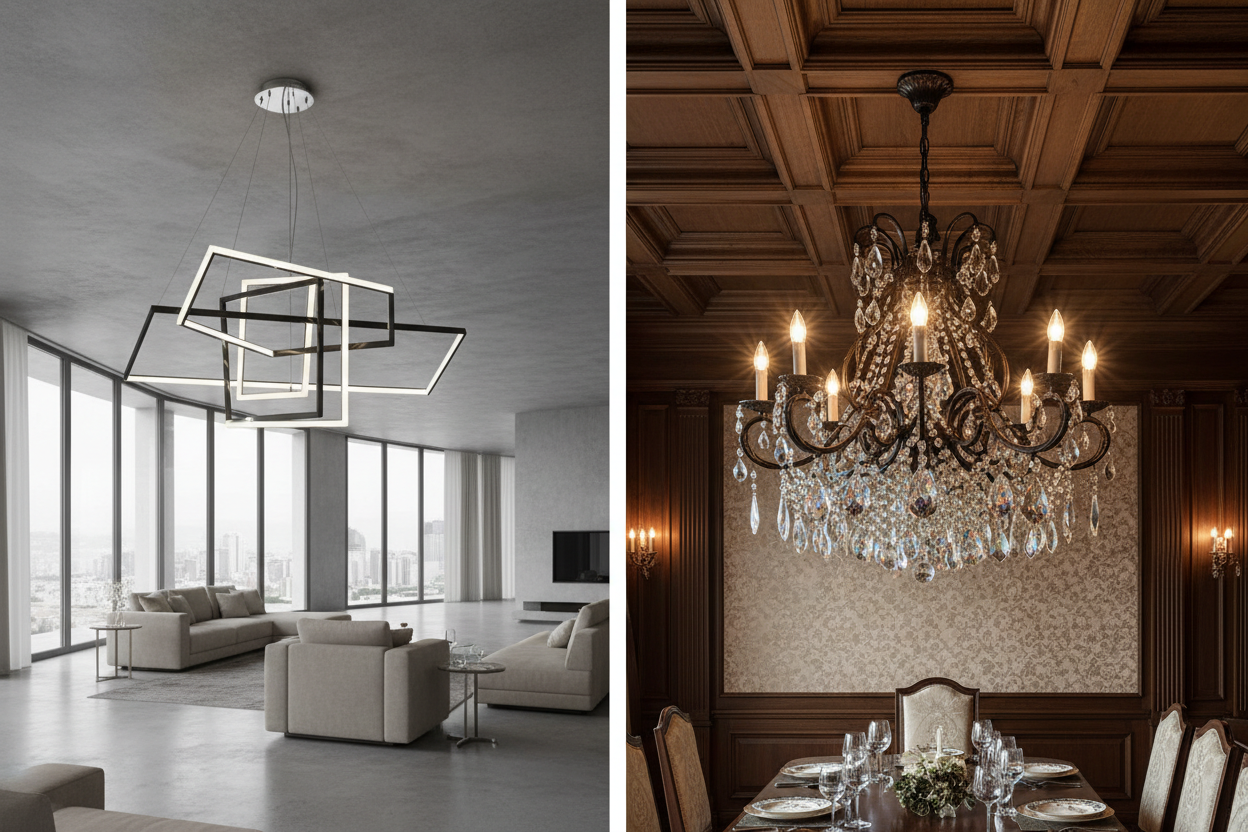
Modern Chandeliers emphasize minimalistic and geometric designs with clean lines. Typically constructed from metals, glass, and acrylics, they present matte black, gunmetal, or brushed metal finishes. For example, the Walsh 7-Light Chandelier combines geometric simplicity with a black gunmetal finish for a refined ultra-modern aesthetic. These fixtures highlight openness and simplicity, melding effortlessly with minimalist interiors.
Traditional Chandeliers impress with intricate detailing, luxurious materials like brass, bronze, and crystal prisms, casting elegant light. Exemplified by the Gibson 9-Light Chandelier featuring aged bronze finishes and classic curves, they exude warmth and timeless sophistication—ideal for formal or classic décor schemes.
Lighting Technology and Effectiveness
- Modern Chandeliers use LED bulbs offering energy efficiency, adjustable brightness, color temperature variability, smart controls, durability, and cooler operation.
- Traditional Chandeliers deploy incandescent or candle-style bulbs providing soft, warm light akin to candlelight but with higher energy use, heat generation, and frequent replacements required.
Installation and Upkeep
- Modern Chandeliers are lightweight due to acrylic and slim metals, feature adjustable chains for height customization, are easy to install (including on sloped ceilings), and require minimal maintenance with smooth surfaces and long-lasting integrated LEDs.
- Traditional Chandeliers made from heavy brass and crystal need sturdy mounts, require careful cleaning of intricate parts to maintain their shine, and demand frequent upkeep to preserve heritage quality.
Cost Range and Worth
Modern chandeliers generally start from around $120 up to $1,000+, making them budget-friendly and versatile. Traditional chandeliers tend to be pricier, often exceeding $1,400 due to premium materials and craftsmanship, reflecting their luxurious standing.
2. Illumination Style for Outdoor and Indoor Spaces: Harmonizing Fixtures with Architecture
Outdoor Lighting Styles and Considerations
Outdoor lighting impacts curb appeal, security, and ambience. The choice should align with your home's architectural style and landscape.
- Traditional Outdoor Lighting: Features classic lanterns, dome path lights, and warm finishes like brass, copper, or bronze producing cozy light temperatures (2700K–3000K) that enhance natural textures like wood and stone.
- Modern Outdoor Lighting: Marks minimalist designs such as bollards or step lights with matte or black finishes. Cool light temperatures (3000K–4000K) provide bright, focused illumination suited to contemporary architecture.
Functional and Aesthetic Significance of Outdoor Lighting
- Accentuates landscaping and architectural details
- Improves safety by lighting paths and entryways
- Creates inviting atmospheres for outdoor gatherings
Design professionals enhance client satisfaction by illustrating direct style comparisons to help clients invest wisely in lighting that balances aesthetics with practicality. For more info on styles, visit Lighting and Sales - Outdoor Lighting Styles.
3. Modern Traditional Lighting: Striking the Perfect Balance
The modern traditional style fuses the elegance of classic shapes and materials with the simplicity and efficiency of modern design. Neutrals like matte black, warm brass, and linen shades create adaptive fixtures that fit diverse interiors, from mid-century to transitional styles.
Popular Fixture Types and Budget-Friendly Alternatives
- Table and Floor Lamps: Tall, slim bases paired with understated shades
- Pendants and Chandeliers: Traditional profiles updated with modern finishes and LED technology
- Sconces and Picture Lights: Simple but subtly accented designs
Examples include the Savoy House Monroe 5-Light Chandelier—offering balanced traditional charm and modern materials—and the UQL3201 Scandinavian Chandelier in Estate Bronze, featuring contemporary circular forms with warm finishes.
Styling Recommendations
- Choose fixtures proportionate to room and ceiling size
- Highlight a single focal element like a dining room chandelier
- Repeat materials and color palettes for cohesion
- Combine clean lines with gentle curves for visual interest
Advantages of Modern Traditional Fixtures
- Versatility to blend with eclectic, modern, and classic furnishings
- Energy-efficient LED lighting with adjustable features
- More affordable options without sacrificing style
- Easier maintenance than ornate traditional chandeliers
4. Selecting the Ideal Chandelier: Factors to Consider for Your Space
- Room Size and Ceiling Height: Larger rooms and higher ceilings can support grand fixtures; smaller rooms require scaled-down or adjustable chandeliers.
- Style Compatibility: Ensure the chandelier complements the architectural and decorative style of your space, whether modern, traditional, or transitional.
- Installation and Maintenance: Consider the fixture’s weight and mounting needs as well as your willingness for routine upkeep and bulb replacements.
- Lighting Functionality: Decide if the chandelier is decorative or primary lighting; opt for dimmable and programmable fixtures for versatile ambience control.
5. Mounting and Maintenance Strategies for Chandeliers
Installation Strategies
- Verify ceiling junction box weight ratings before installation
- Use adjustable chains to set ideal chandelier height—30 to 36 inches above dining tables is recommended
- For sloped ceilings, select fixtures with swivel canopies or compatible adjustments
- Hire licensed electricians when unsure to ensure safety and code compliance
Maintenance Recommendations
- Dust modern fixtures regularly using microfiber cloths to prevent buildup
- Clean traditional chandeliers carefully, using glass cleaner or soapy water on crystals; dry well to avoid water spots
- Replace LED elements according to manufacturer guidelines; they last over 25,000 hours
- Always turn off power before cleaning for safety
6. Smart Lighting Integration: Fusing Convenience with Efficiency
Many modern traditional chandeliers now incorporate smart features, elevating control and energy management to new heights.
- Adjustable brightness and color temperature for customized atmospheres
- Timers and automation controllable via smartphone apps
- Voice-command compatibility integrated with smart home systems
- Energy monitoring to optimize electricity consumption
Smart chandeliers amplify convenience and contribute to power savings while creating tailored lighting scenarios from task-focused illumination to relaxing evenings. Discover more at Kichler - Smart Lighting Options.
7. Conclusion: Crafting the Ideal Lighting - A Blend of Beauty and Efficiency
Understanding the distinctions between modern and traditional chandeliers equips you to choose fixtures that blend aesthetics and performance perfectly.
- Modern chandeliers shine with minimalism, energy savings, and simple upkeep.
- Traditional chandeliers impress with timeless appeal, warm ambiance, and refined craftsmanship, yet require more care.
- Modern traditional lighting balances both styles for flexible integration across design schemes.
- Outdoor lighting choices should harmonize with architectural elements, supporting both ambiance and security.
Armed with this knowledge, you can confidently select chandeliers that enhance your space’s atmosphere and enduring charm for years to come.
Recommended Modern Traditional Chandeliers to Explore
- UQL3201 Scandinavian Chandelier (Estate Bronze) – Urban Ambiance
- Moderne 6.75" LED Chandelier (Olde Bronze) – Kichler Lighting
- Savoy House Monroe 5-Light Chandelier
- Nordic Fishbone Statement Piece – LBX Lighting
FAQ
Q1: Which chandelier style is more energy-efficient?
Answer: Modern chandeliers generally use LED technology, which consumes significantly less power and has a longer lifespan compared to the incandescent or candle-style bulbs common in traditional chandeliers.
Q2: Can I install a chandelier on a sloped ceiling?
Answer: Yes, many modern chandeliers come with swivel canopies or accessories to facilitate installation on sloped ceilings, making them versatile for various architectural surfaces.
Q3: How often do traditional chandelier bulbs need replacement?
Traditional incandescent or candle-style bulbs typically require replacement every 1,000 to 2,000 hours, whereas LEDs can last 25,000 hours or more, reducing frequency significantly.
Q4: What maintenance does a crystal chandelier require?
Crystal chandeliers require delicate cleaning with glass cleaner or mild soapy water, careful drying to prevent water spots, and regular dusting to maintain their brilliance.
Q5: Are smart chandeliers compatible with voice assistants?
Many modern traditional smart chandeliers support integration with voice assistants such as Amazon Alexa, Google Assistant, or Apple HomeKit, enabling hands-free control of lighting features.