Cart
0
How to Use Lighting and Interior Design to Make Small Spaces Look Bigger
Discover expert strategies combining lighting and interior design to effortlessly expand the perceived size of your small living spaces. From layered lighting to smart color palettes, learn how to transform compact rooms into bright, airy, and inviting environments.
Key Takeaways
- Layered lighting using ambient, task, accent, and decorative sources creates depth and reduces shadows.
- Maximize natural light with sheer curtains, strategic furniture placement, and reflective surfaces like mirrors.
- Vertical design elements and elongated lighting fixtures draw the eye upward to enhance perceived height.
- Light, neutral color palettes and carefully chosen furniture scales prevent visual clutter and open up floor space.
- Control color temperature and brightness to balance coziness with spaciousness.
- Minimalist décor and thoughtful statement pieces emphasize spaciousness without overwhelming the room.
Table of Contents
- 1. Layered Lighting: A Fundamental Approach
- 2. Maximizing Natural Light
- 3. Reflective Surfaces and Mirrors
- 4. Vertical Emphasis in Lighting and Design
- 5. Color Palette Choices
- 6. Furniture Scale and Statement Pieces
- 7. Color Temperature and Brightness
- 8. Minimalist Décor
- 9. Design Styles Complementing Small Spaces
- 10. Final Thoughts
1. Layered Lighting: A Fundamental Approach
Relying solely on a single overhead light can make a small room feel flat and confined. Instead, layered lighting uses a combination of ambient, task, accent, and decorative fixtures to create depth, eliminate harsh shadows, and foster an inviting, spacious atmosphere.
The Concept Behind Layered Lighting
- Ambient Lighting: Provides uniform illumination for general visibility.
- Task Lighting: Focuses on specific activities like reading or cooking.
- Accent Lighting: Highlights artwork, architectural features, or décor.
- Decorative Lighting: Adds personality and style through statement fixtures such as chandeliers or pendants.
Practical Strategies for Small Spaces
- Use wall sconces instead of floor lamps to save floor space and add vertical light.
- Choose tall pendant lights to draw the eye upward, emphasizing ceiling height.
- Combine recessed ceiling lights with table lamps or LED rope lights behind furniture for soft, indirect illumination.
- Install dimmable LEDs to adjust light levels throughout the day for comfort and ambiance.
“Thoughtful layering of lighting creates a warm, inviting space that feels more open and airy.”
2. Maximizing Natural Light
Natural light instantly brightens and visually expands small rooms. Harnessing it effectively transforms interiors into lively, welcoming spaces.
Tips for Harnessing Natural Light
- Replace heavy drapes with sheer or light-filtering curtains to diffuse sunlight while allowing maximum flow.
- Arrange furniture to keep windows unobstructed.
- Use light-colored walls and floors to reflect sunlight throughout the room.
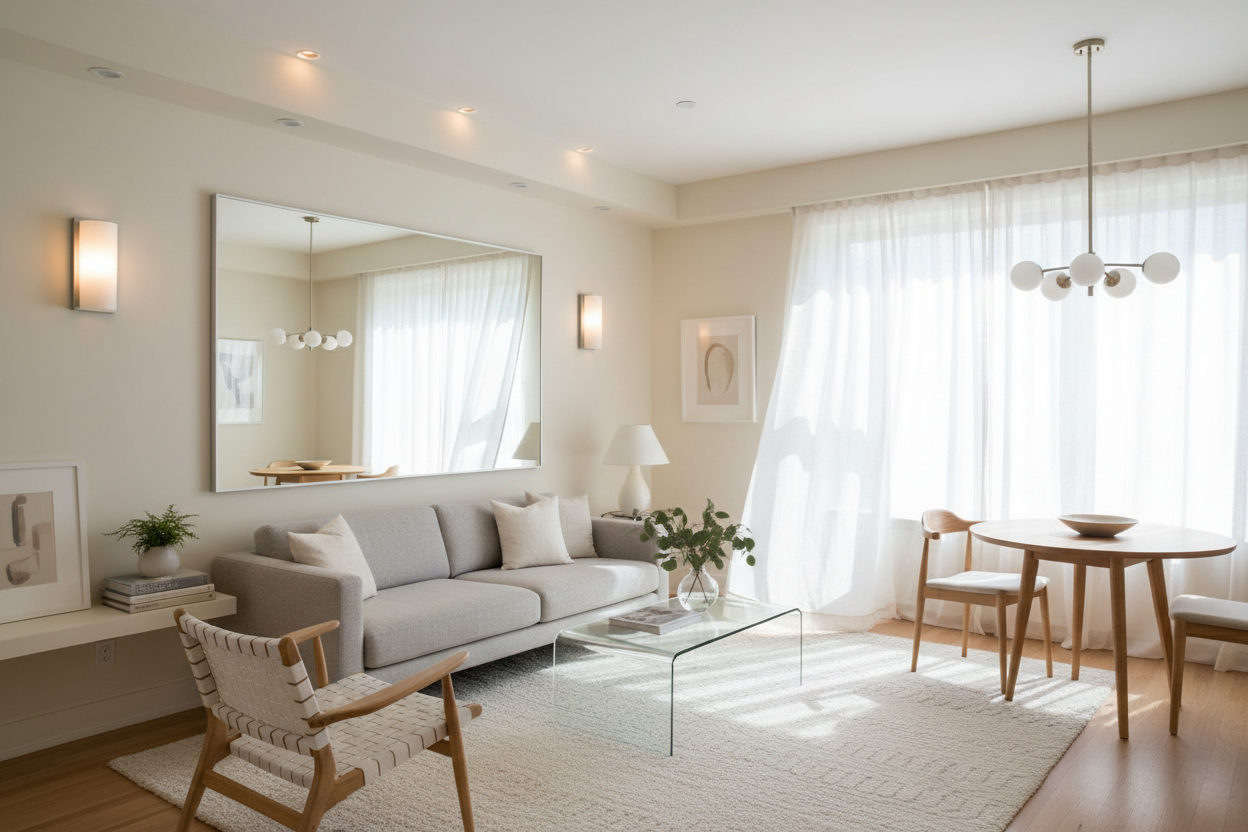
- Place mirrors opposite windows to amplify natural light and visually expand space.
Benefits of Utilizing Natural Light
- Enhances mood and energy while preserving true color fidelity.
- Fosters a stronger indoor-outdoor connection, increasing perceived spaciousness.
- Works harmoniously with artificial lighting, enhancing overall ambiance.
3. Reflective Surfaces and Mirrors
Mirrors and glossy materials multiply available light, boost depth perception, and create captivating optical illusions essential for small spaces.
Tactical Use of Mirrors
- Place large mirrors across from windows or lighting sources to double light output visually.
- Install floor-to-ceiling mirrors or mirrored panels behind sofas or beds to simulate added space.
- Incorporate mirrored furniture or glass tabletops to reduce visual bulk and lighten furnishings.
- Avoid placing mirrors where direct sunlight causes glare or discomfort.
Additional Reflective Materials
- Lacquered cabinetry or side tables.
- Metallic finishes such as brass or chrome in fixtures.
- Polished stone or quartz countertops that mirror overhead lights.
4. Vertical Emphasis in Lighting and Design
Directing attention upward through vertical elements and lighting enhances perceived height, alleviating feelings of confinement.
Influencing Height Perception
- Install tall bookshelves or floor-to-ceiling storage units to draw eyes upward.
- Use elongated pendant lights or vertical wall sconces for heightened awareness of ceiling height.
- Hang curtains near ceiling lines extending beyond windows to augment vertical illusion.
- Adorn walls with vertical stripes or wood paneling to visually lift ceilings.
Lighting Recommendations
- Select sleek, tall pendant fixtures hung at optimal height without crowding space.
- Mount wall sconces high to create the impression of towering walls.
- Complement vertical décor with floor lamps featuring elongated profiles.
5. Color Palette Choices
Light and neutral colors reflect light effectively, making a room feel more open and serene compared to darker hues that absorb light.
Optimal Hues for Small Rooms
- Whites, off-whites, and creams for seamless brightness.
- Soft beiges, pale taupes, and muted pastels to maintain a gentle, airy vibe.
- Subdued blues, greens, and blushes for subtle color accents.
- Light natural woods and linen for organic warmth.
Color Coordination Tips
- Match wall, ceiling, and floor shades for an unbroken visual flow.
- Opt for light lampshades and fabrics to enhance light diffusion.
- Use subtle contrasts to introduce depth without fragmenting space.
Material Recommendations
- Linen, cotton, or silk textiles in light tones reflect light softly.
- Light wood flooring and furniture pieces spread light evenly.
- Glass or acrylic accents contribute to an airy, weightless feel.
6. Furniture Scale and Statement Pieces
The proportion and placement of furniture define the spatial atmosphere. Choosing appropriately sized pieces and strategic focal points enhances openness.
Furniture Tips
- Select slim-profile furniture with raised legs to reveal more floor area visually.
- Prefer transparent materials like glass or acrylic to minimize bulk.
- Avoid bulky, heavy pieces that crowd space.
Using Statement Pieces Wisely
- Introduce a bold, oversized lamp or distinctive pendant to create visual interest.
- Limit large statement pieces to prevent overwhelm.
- Use focal items to add depth and intrigue, preventing monotony.
Spatial Arrangement
- Keep pathways clear to improve flow and openness.
- Employ multifunctional furniture like storage ottomans or foldable desks for versatility.
- Position seating in clusters or floating arrangements instead of pressed against walls.
7. Color Temperature and Brightness
The warmth or coolness of lighting and its brightness level shape the emotional tone and spacious feel of a room.
Understanding Color Temperature
- Warm Light (2700–3000K): Soft, golden glow creating cozy yet spacious ambiance.
- Neutral Light (3500–4100K): Bright yet natural appearance.
- Cool Light (5000K+): Stark, bluish daylight effect often too harsh for small living areas.
Recommendations for Small Spaces
- Use warm-white lighting (2700–3000K) to balance comfort and openness.
- Avoid overly cool light that can feel uninviting.
- Choose bulbs with adequate lumens for bright illumination without glare.
- Install dimmable LEDs to tailor brightness according to time and mood.
- Combine direct and indirect sources to minimize shadows and enhance dimensionality.
8. Minimalist Décor: Less Is More
Clutter quickly diminishes the sense of space. A minimalist approach highlights lighting and design elements while ensuring an open, airy room.
Strategies for Minimalism
- Regularly declutter surfaces to maintain simplicity.
- Use multifunctional furniture to reduce piece count.
- Choose muted textures and patterns over intricate, ornate designs.
- Select a few impactful décor items rather than many small accessories.
Benefits of Minimalist Design
- Accentuates light and space as the dominant elements.
- Limits visual noise that contributes to cramped feelings.
- Draws attention to layered lighting and key architectural details.
9. Design Styles Complementing Small Spaces
Certain interior styles harmonize effortlessly with small-space lighting tactics to maximize openness and aesthetic appeal.
Recommended Styles
- Mid-Century Modern: Clean lines and minimal fixtures that support layered lighting without overpowering.
- Vintage and Antique Lighting: Elegant sconces and low-profile ceiling lights that maintain openness and sophistication.
- Contemporary: Sleek LED fixtures and graceful pendants that optimize light distribution and visual interest.
Choose fixtures and décor that fit your space’s scale and enhance verticality while promoting natural and artificial light interplay.
10. Final Thoughts: Harmonizing Lighting and Design Strategies
Creating a spacious feel in small living areas is achievable by thoughtfully integrating layered lighting, natural light, reflective finishes, and vertical design cues. Complementing these with light color palettes and scaled, minimal furnishings enhances openness and warmth. Additionally, managing color temperature and brightness shapes an inviting environment that balances cozy comfort with airy expansiveness.
By applying these effective, budget-friendly techniques, even the smallest rooms can evolve into elegant, welcoming sanctuaries. Begin your transformation by experimenting with lighting today and witness the remarkable difference it makes.
For a premium selection of lighting fixtures meticulously designed to finesse the innate essence of small spaces, delve into Lightsdaddy’s exclusive inventory of contemporary lighting solutions.
FAQ
Q1: What is the best type of lighting for a small room?
Layered lighting combining ambient, task, accent, and decorative sources is ideal for small rooms, as it adds depth, reduces shadows, and creates an open, inviting atmosphere.
Q2: How can mirrors help make a small space look bigger?
Mirrors reflect and multiply light, visually expanding the room’s depth and brightness. Placing large mirrors opposite windows or lighting sources doubles light and enhances openness.
Q3: What colors should I use to make a room feel more spacious?
Light and neutral colors such as whites, creams, soft pastels, and pale woods reflect light effectively and create a seamless, airy feel that enlarges small rooms visually.
Q4: Why is vertical emphasis important in small space design?
Vertical elements and lighting draw the eye upward, enhancing ceiling height perception and reducing feelings of confinement by shifting focus away from horizontal limitations.
Q5: How does color temperature affect the mood in small rooms?
Warm-white light (2700–3000K) provides a cozy yet spacious feel, while cool light can feel harsh and uninviting. Proper color temperature balances comfort with openness.