Cart
0
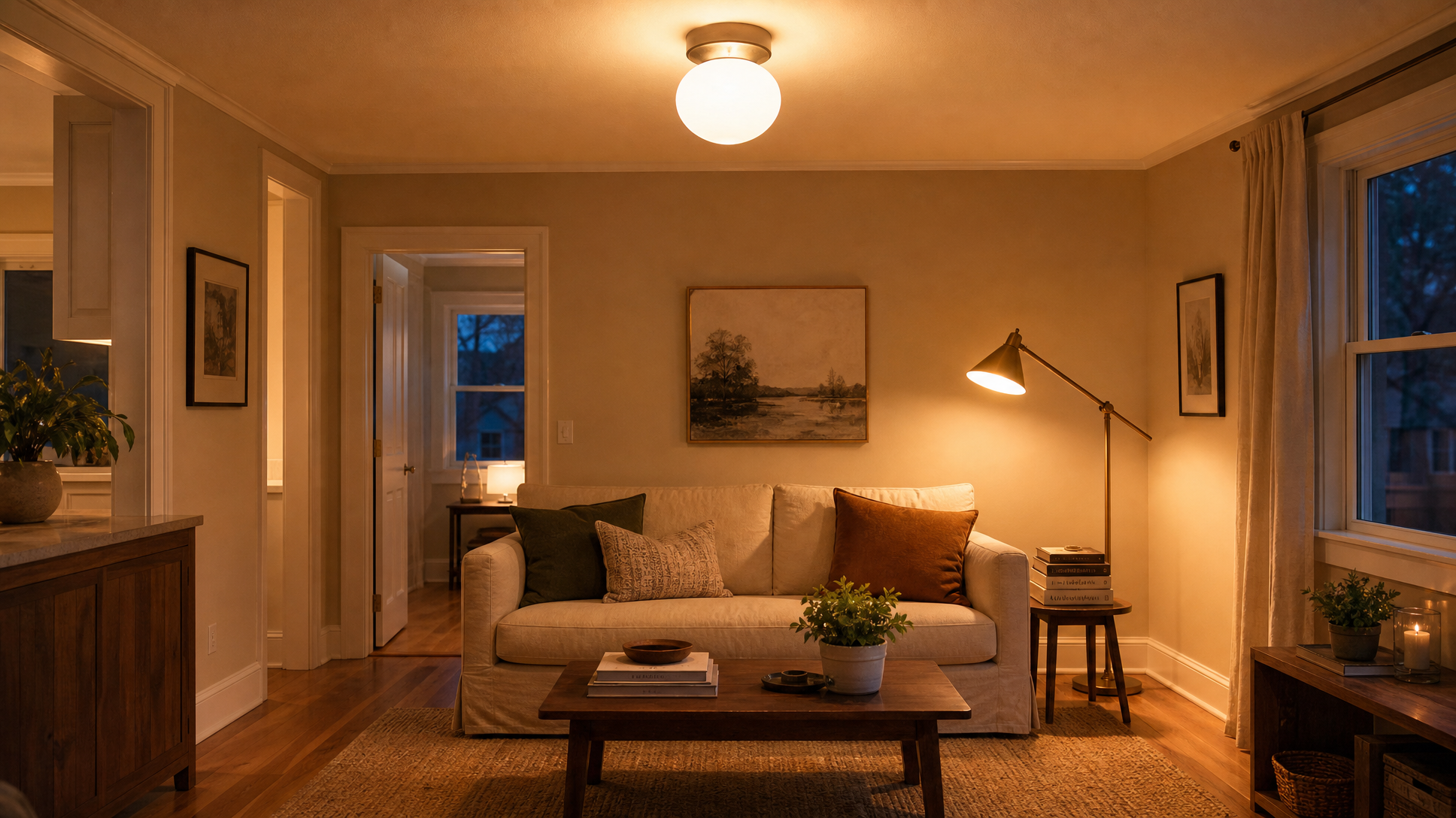
Here's the mistake most people make when switching to LED: they grab the fixture with the lowest wattage number, assume that means it's efficient, and call it a day. Then six months later the kitchen feels like a cave, the bedroom light is weirdly blue, and the dimmer switch buzzes like a trapped fly.
Choosing an energy-efficient LED fixture isn't just about picking the lowest watt count. It's about matching the right light output, color, and control to each room — so you're not paying to replace a fixture that technically works but practically doesn't.
Here's how to do it room by room.
Start with lumens, not watts
Watts measure power consumption. Lumens measure how much light actually comes out. Those are two different things, and conflating them is where most shoppers go wrong.
With incandescent bulbs, wattage was a reliable shorthand for brightness because the ratio was consistent. LED breaks that relationship entirely — a well-made LED fixture can produce the same light output as an older incandescent at a fraction of the wattage. So when you're comparing fixtures, look at the lumen output first. Wattage tells you what it costs to run; lumens tell you whether it'll actually light the room.
A rough rule of thumb most lighting professionals use: multiply the square footage of the room by about 20 to get a baseline lumen target for general ambient lighting. A larger open-plan kitchen or a workspace may need more; a cozy reading nook or a hallway can get away with less. Use it as a starting point, not a hard rule.
Color temperature: the spec that changes the entire feel of a room
Color temperature is measured in Kelvins (K). Lower numbers are warmer (more amber, like candlelight). Higher numbers are cooler (crisper, more blue-white, like daylight). This single spec does more to shape how a room feels than almost anything else, and it's the one most people skip entirely.
Here's a practical breakdown of what works where:
- 2700K–3000K (warm white): Bedrooms, living rooms, dining rooms. Creates a relaxed, inviting atmosphere. This is the closest LED equivalent to the warm glow of a traditional incandescent.
- 3500K–4000K (neutral/cool white): Kitchens, bathrooms, home offices, laundry rooms. Cleaner and brighter without feeling clinical — good for task-heavy spaces where you need to see clearly.
- 5000K–6500K (daylight): Garages, workshops, utility areas. High contrast and alert-making. Useful where accuracy matters (like matching paint colors or doing detail work), but harsh for living spaces.
One thing worth knowing: you can't change the color temperature of a fixture after you buy it unless it's specifically marketed as a tunable or color-selectable model. So decide before you purchase, not after.
Room by room: what to actually look for
Kitchen
The kitchen needs layered lighting — bright overhead for cooking and prep, softer ambient light for everything else. A ceiling fixture or flush mount in the 3000K–4000K range handles the ambient layer well. If your kitchen has an island or countertops that need task lighting, consider under-cabinet LED strips in addition to your main fixture. Look for a high CRI (Color Rendering Index) rating — ideally 90 or above — so food looks the way it actually looks, not washed out or oddly tinted.
Living Room
This is the room where dimmability matters most. You want the option to drop the light low for movie nights and bring it back up when you're reading or hosting. Not every LED fixture is dimmable, and even dimmable fixtures can flicker or buzz if paired with the wrong dimmer switch. Before you buy, confirm the fixture is labeled dimmable and check whether it requires a specific dimmer type (many LED fixtures specify LED-compatible dimmers). Warm white — 2700K to 3000K — is almost always the right call here.
Bedroom
Warm and soft. Full stop. A bedroom lit at 5000K daylight feels like a hospital room, not a place to wind down. Stick to 2700K, keep the lumen output on the lower side for the main fixture, and add a lamp or two for reading. If you're installing a ceiling fan with an integrated light kit, double-check the color temperature of the included LED — many default to a neutral white that's fine but not as restful as warm white.
Bathroom
Bathrooms split into two zones with different needs. The vanity area — where you're doing makeup, shaving, or checking your appearance — benefits from a neutral to cool white (3000K–4000K) with high CRI so colors render accurately. The rest of the bathroom can be slightly warmer. Avoid going too cool at the vanity; it tends to make skin tones look flat. Also look for fixtures rated for damp or wet locations depending on how close they'll be to the shower or tub.
Home Office
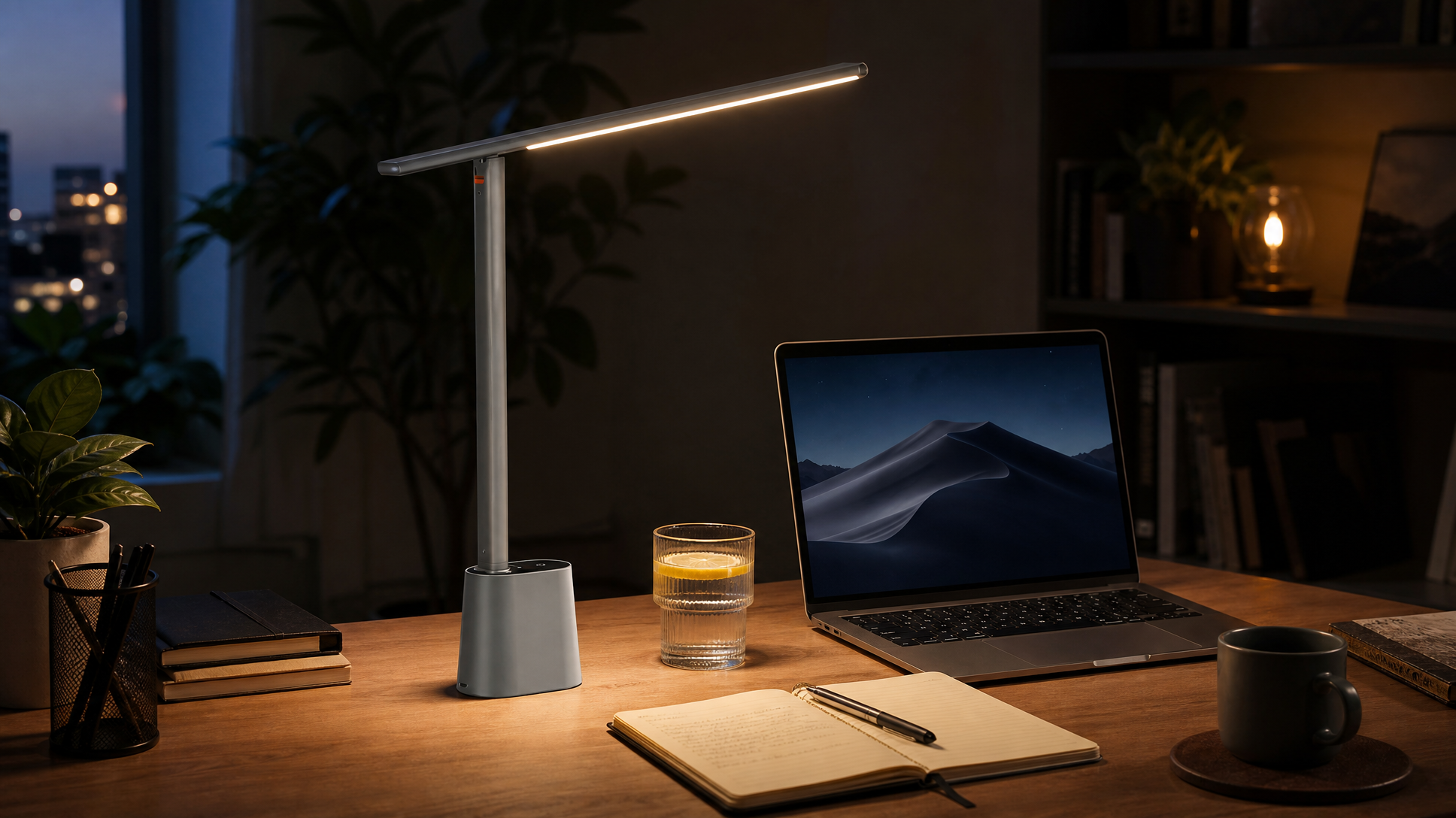
Glare and eye fatigue are the enemies here. A fixture with a diffused lens or shade (rather than exposed bulbs) spreads light more evenly and reduces harsh shadows on your desk. Neutral white in the 4000K range supports focus without being as aggressive as daylight. If you're on video calls regularly, pay attention to where the light falls — overhead-only lighting can create unflattering shadows. A desk lamp in addition to your ceiling fixture helps a lot.
Outdoor spaces
Outdoor LED fixtures need to be rated for the environment — look for IP (Ingress Protection) ratings on the product listing. An IP44 or higher rating means the fixture can handle rain and general outdoor exposure. For security or pathway lighting, motion sensor ceiling lights are a practical choice: they stay off until triggered, which saves energy without sacrificing safety. Color temperature around 3000K–4000K works well outdoors — warm enough to look welcoming, bright enough to be functional.
The dimmability trap (and how to avoid it)
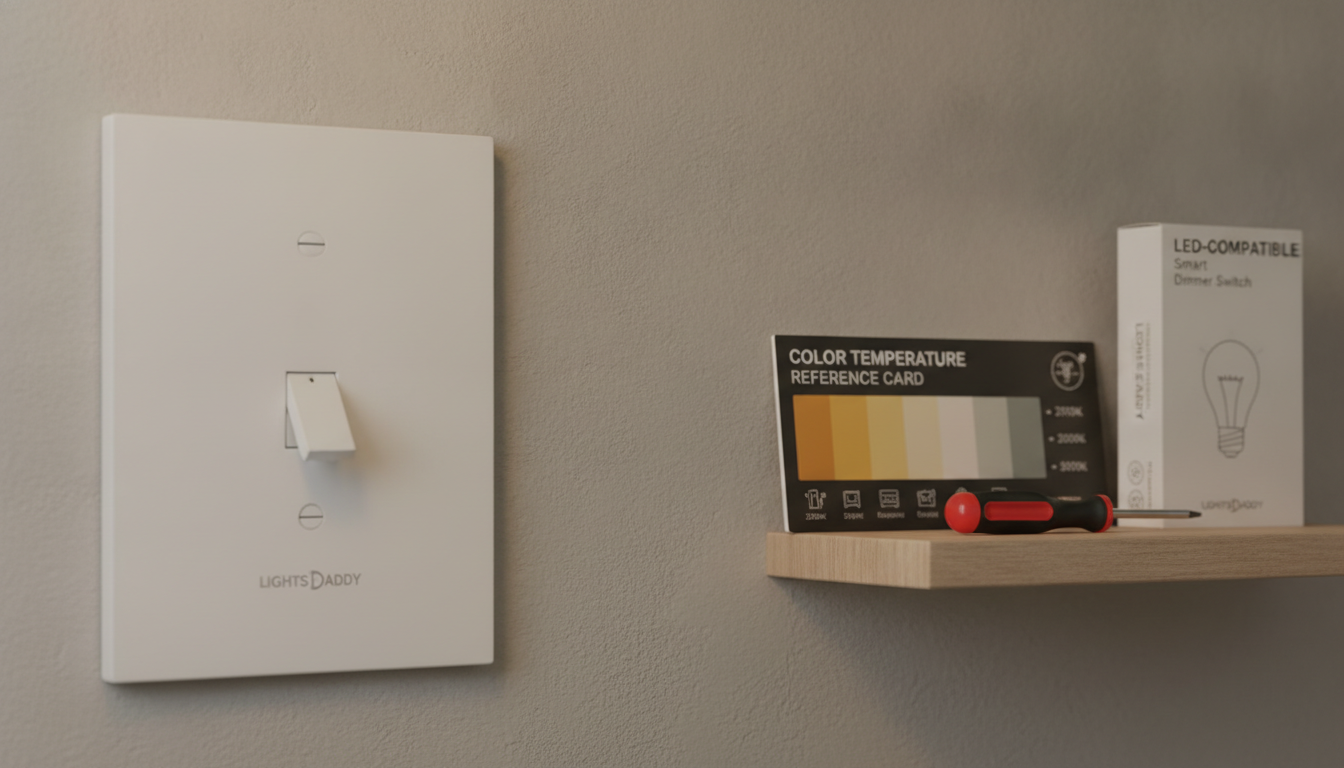
Dimmable LED fixtures are worth the small price premium in rooms where you actually want to control the mood — living rooms, dining rooms, bedrooms. But there's a catch that catches a lot of people off guard: the fixture being dimmable doesn't automatically mean it'll work with your existing dimmer switch.
Many older dimmer switches were designed for incandescent bulbs and don't play well with LEDs. The result is flickering, buzzing, or a limited dimming range (the light barely dims before it just turns off). If you're replacing a fixture in a room that already has a dimmer, check whether your current switch is LED-compatible before assuming it'll work. Replacing the dimmer switch is usually a simple fix — but it's better to know upfront than to troubleshoot it after installation.
Energy efficiency: what the numbers actually mean for your bill
LED fixtures use significantly less energy than incandescent or halogen equivalents to produce the same light output. The exact savings depend on how many hours a day the light runs, your local electricity rate, and what you're replacing — but the gap is real and consistent enough that switching to LED throughout a home adds up over time.
A few things that affect efficiency beyond the base wattage:
- Motion sensors: A fixture that only runs when someone's in the room is inherently more efficient than one left on all day. Motion sensor ceiling lights are especially useful in hallways, closets, garages, and bathrooms.
- Dimmability: Running a dimmable fixture at lower brightness uses less energy. If you're in a room where you rarely need full brightness, a dimmable fixture pays back its slightly higher cost.
- Integrated LED vs. replaceable bulb: Fixtures with integrated LEDs (where the LED is built into the fixture rather than a separate bulb) are often more efficient and longer-lasting, but when the LED eventually fails, you replace the whole fixture. Fixtures that use standard LED bulbs give you more flexibility. Neither is objectively better — it depends on your priorities.
Don't optimize for price alone
The cheapest LED fixture in a category is almost never the best value. A fixture that produces the wrong color temperature for the room, flickers when dimmed, or fails after 18 months costs more in the long run than a mid-range option that gets it right the first time.
The better question isn't "what's the cheapest LED fixture?" It's "what's the right fixture for this room, and what's the most reasonable price for that?" Once you know what specs you need — lumen output, color temperature, dimmability, wet/dry rating — you can compare options at similar spec levels and make a genuinely informed choice.
If you're also upgrading your vehicle's lighting or adding LED strips to a room, the same principle applies — know the spec first, then shop. Our LED Strip Lights Buying Guide covers what to look for before you buy strip lighting specifically.
Ready to find the right fixture for your space? Shop energy-efficient LED fixtures at LightsDaddy — with free shipping across the USA, it's easy to get the right light delivered to your door.
Frequently Asked Questions
How many lumens do I need for a bedroom vs. a kitchen?
A general starting point is to multiply the room's square footage by roughly 20 to get a baseline lumen target for ambient lighting. Kitchens and workspaces typically benefit from being on the higher end of that range (or adding task lighting on top), while bedrooms can go lower for a more relaxed feel. These are guidelines, not rules — your preference for bright or dim spaces matters too.
Can I use any dimmer switch with a dimmable LED fixture?
Not always. Many older dimmer switches were designed for incandescent bulbs and can cause LED fixtures to flicker, buzz, or have a very narrow dimming range. Look for a dimmer switch specifically rated for LED loads, and check the fixture's documentation for any compatibility notes. Swapping an old dimmer for an LED-compatible one is usually a straightforward fix.
What does CRI mean, and does it actually matter?
CRI stands for Color Rendering Index — it measures how accurately a light source renders colors compared to natural daylight, on a scale up to 100. A higher CRI (90+) means colors look more true-to-life, which matters most in kitchens, bathrooms, and anywhere you're matching colors or applying makeup. For hallways or utility spaces, a lower CRI fixture is perfectly fine and often less expensive.
What's the difference between a damp-rated and wet-rated outdoor fixture?
A damp-rated fixture can handle humidity and indirect moisture — suitable for covered porches, soffits, or bathrooms. A wet-rated fixture is designed for direct exposure to rain and water, making it the right choice for open outdoor areas, eaves, or anywhere rain can hit the fixture directly. Always check the rating on the product listing before installing a fixture outdoors.