Cart
0
Here's the mistake most people make when shopping for lighting: they treat every room the same. They either buy whatever looks prettiest and wonder why they can't see anything, or they go full-utilitarian and end up with a space that feels like a parking garage. The truth is, the right light for a living room shelf and the right light for a garage workshop are almost opposite things — and knowing which one you actually need before you buy saves a lot of returns.
This guide cuts through the confusion. We'll look at what separates decorative lighting from functional lighting, which spaces call for which, and four real products that sit at different points on that spectrum.
The Core Difference (It's Simpler Than You Think)
Decorative lighting is chosen primarily for how it looks and the mood it creates. The light output is secondary — sometimes almost incidental. Think accent lamps, sculptural pendants, LED strips behind a monitor. These lights say something about the space.
Functional lighting is chosen for how well it illuminates. Aesthetics matter less than brightness, coverage, and reliability. Think shop lights, utility fixtures, high-powered flashlights. These lights do a job.
Most homes need both. The mistake is buying one type for a space that needs the other.
Five Spaces, Five Decisions
1. The Living Room or Bedroom — Lead with Decorative
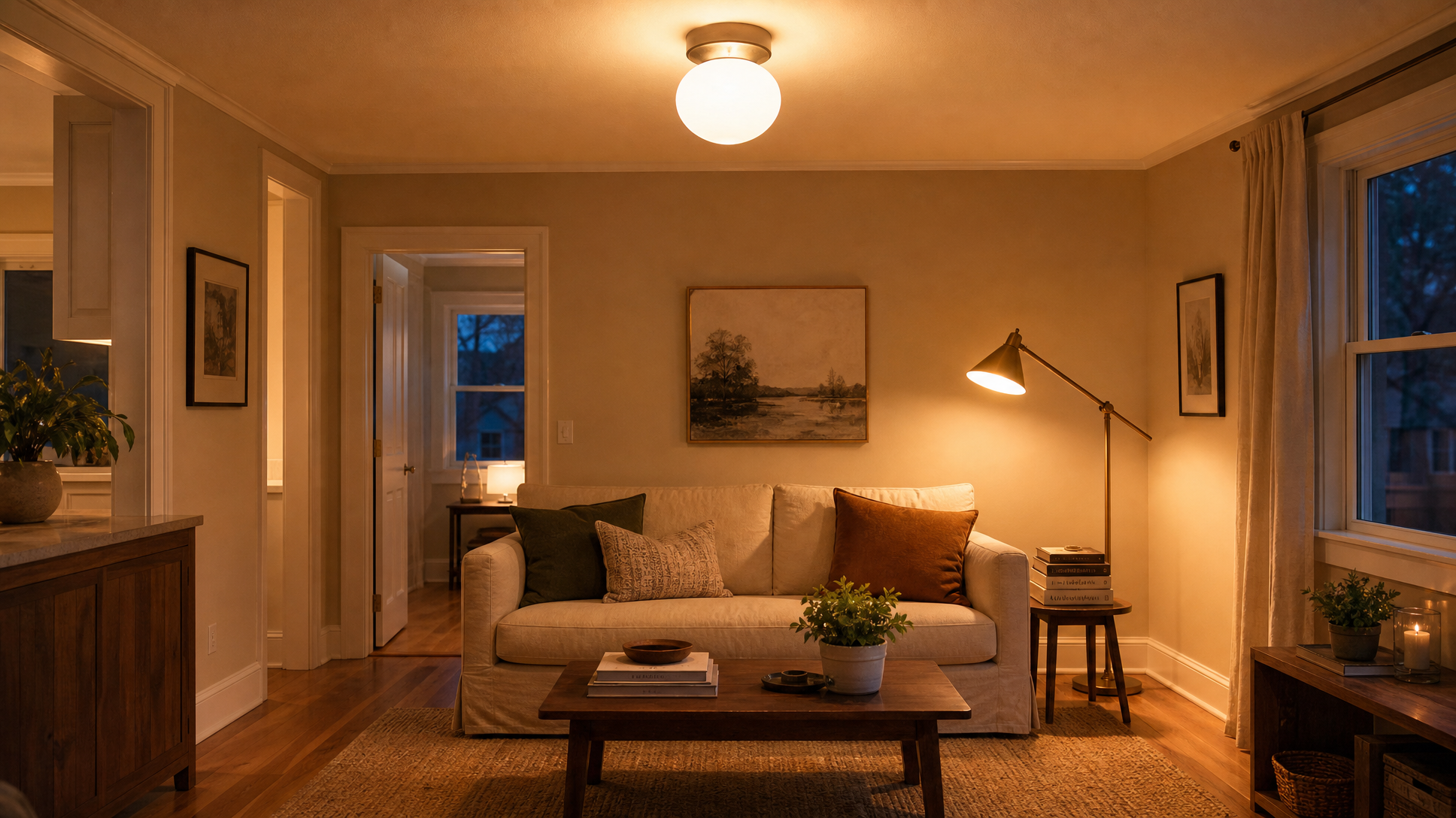
These are rooms where atmosphere does the heavy lifting. You're not performing surgery; you're reading, relaxing, or hosting. A lamp that brings personality to the space earns its place here even if it's not blazingly bright.
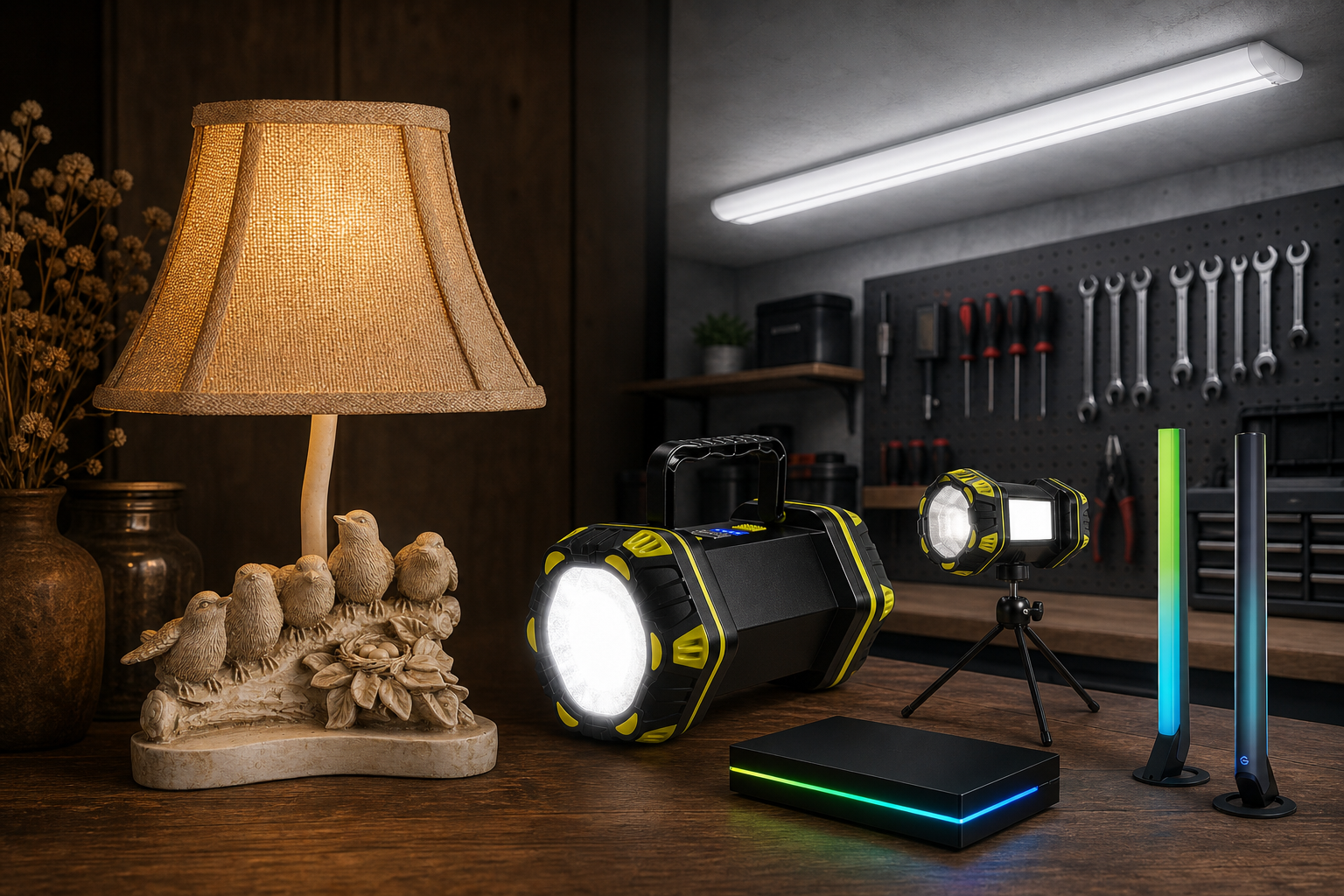
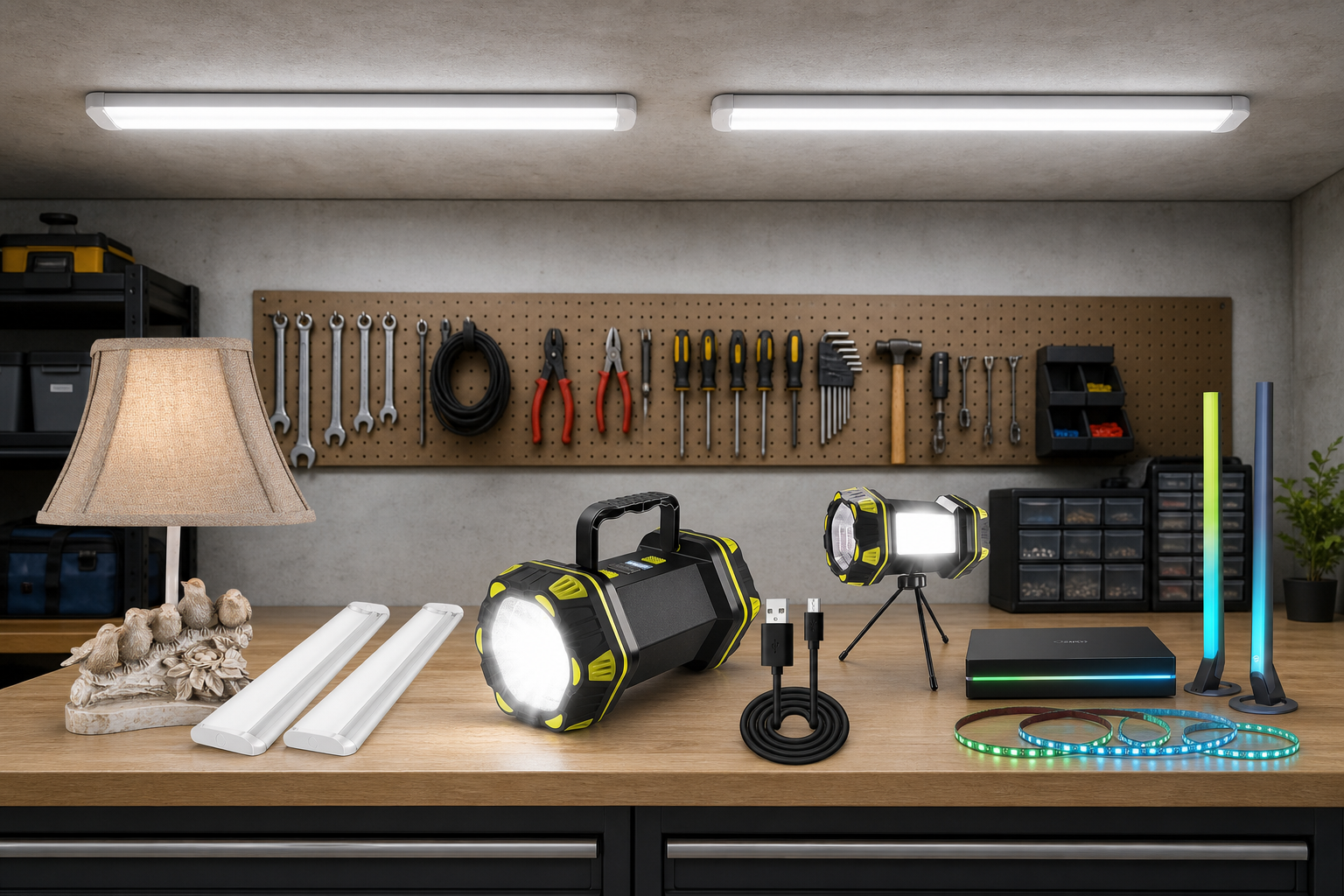
The Little Bird Sing A Long Accent Table Lamp is a textbook example of decorative-first design. The base is sculpted polyresin — five small birds perched on a branch above a nest, finished in a creamy, distressed, antiqued beige. The shade is a light brown burlap-style linen that casts a warm, diffused glow. This isn't a lamp you buy because you need more lumens. You buy it because it makes a farmhouse sideboard, a cottage nightstand, or a rustic reading nook feel intentional and alive. It's the kind of piece that makes guests ask where you found it.
If your room already has an overhead fixture handling the actual illumination, an accent lamp like this is exactly what the space is missing.
2. The Garage or Workshop — Lead with Functional
A garage is the opposite situation. Nobody cares what the light looks like. What you care about is whether you can clearly see a bolt head, a paint drip, or a safety hazard. Shadow and glare are genuine problems here, not aesthetic ones.
The Antlux 110W 8Ft LED Wraparound Ultra Slim Strip Lights (2 Pack) is built for exactly this. At 110W and 12,600 lumens per fixture across a 5000K daylight color temperature, these are designed to flood a large space with even, shadow-minimizing light. The slim wraparound profile flush-mounts to the ceiling cleanly, and the 8-foot length means two units can cover a two-car garage or a full workshop bay. They're also a direct fluorescent tube replacement — so if you're upgrading an older space, the swap is straightforward.
This is a light you choose with a tape measure and a lumen calculator, not a mood board.
3. The Outdoors, Trail, or Emergency Kit — Portable Functional
Outdoor and emergency lighting is purely functional, but with a twist: it has to be self-sufficient. No wall outlet, no ceiling junction box. The light needs to go where you go.
The GHIME Torch Light High Power Rechargeable Flashlight is built around versatility rather than a single use case. It integrates three light sources into one unit: a front spotlight (high/low), a back floodlight with multiple modes including red and red strobe, and a side lantern (high/low) — eight modes in total, switchable between two controls. It charges via USB, comes with a tripod so it can stand independently as a camp lantern, and is rated as waterproof. The black and yellow housing is rugged and grip-friendly.
This is the kind of light you keep in the truck, the camping bag, or the emergency drawer. It doesn't care what your living room looks like.
4. The Gaming Setup or Home Office — Decorative That Earns Its Keep
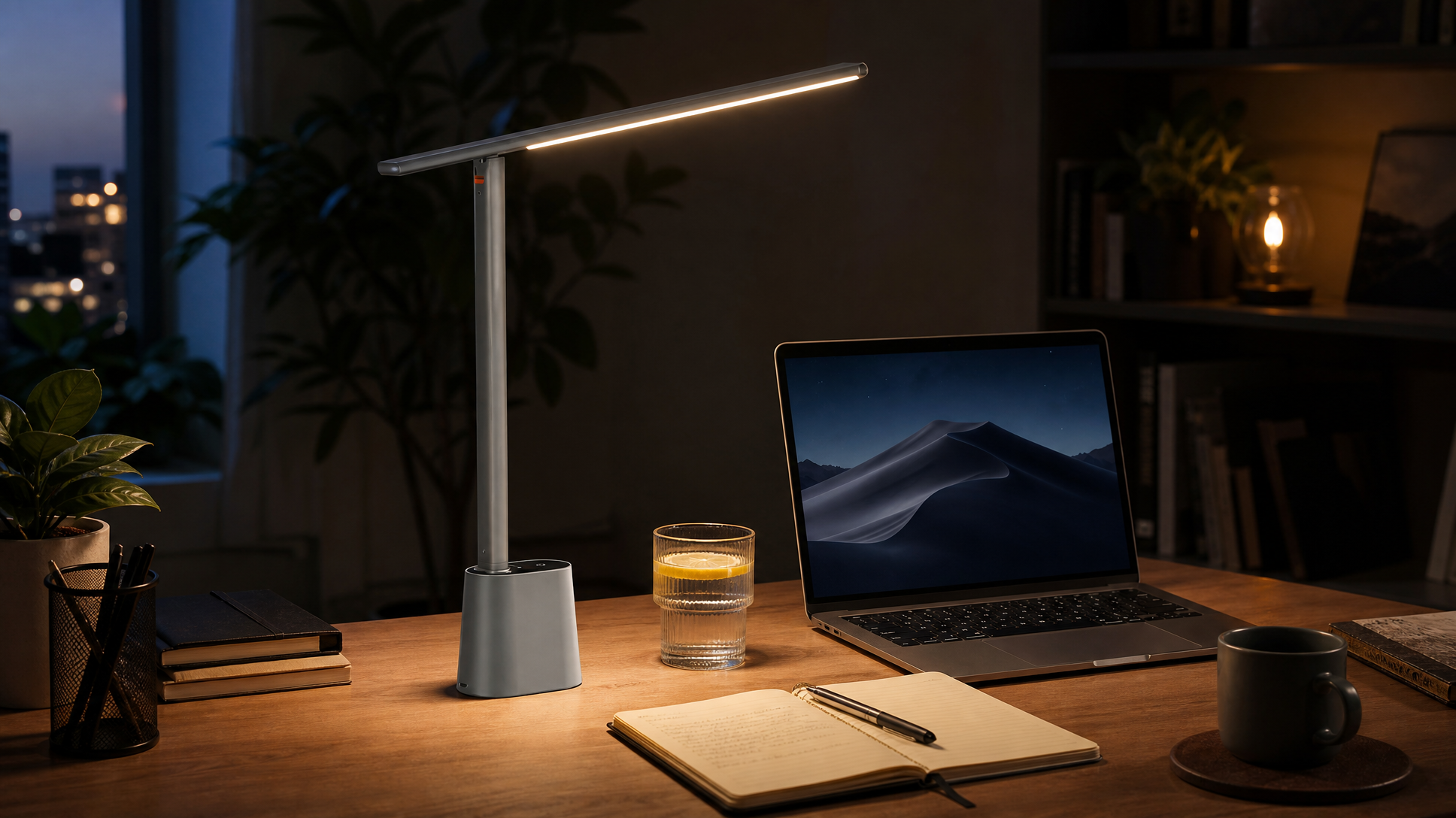
This category is interesting because it sits right at the intersection. Bias lighting behind a monitor is decorative — it softens eye strain and adds visual drama — but it also has a functional purpose: reducing the contrast between a bright screen and a dark room, which genuinely helps with long sessions.
The Govee HDMI 2.1 Sync Box Kit 2 is the most technically involved product in this list. It includes an AI Sync Box, RGBIC light strips for monitor backlighting, and light bars — all designed for 27–34 inch monitors. The sync box connects via HDMI 2.1, supports 8K@60Hz and 4K@144Hz, and uses AI to read the screen image and match the surrounding light to what's on screen in real time. It works with Matter, Alexa, and Google Home, and the RGBICW technology allows for richer, more nuanced color output than standard RGB strips.
This is decorative lighting that actively responds to what you're doing — a genuinely different category from a static accent lamp, and a completely different category from a garage shop light.
5. The Utility Room, Laundry, or Storage Space — Functional, No Debate
Laundry rooms, storage closets, basements, pantries — these spaces get ignored when it comes to lighting, and they shouldn't. Poor visibility in a utility space is where things get lost, mislabeled, or misread. The fix is the same as the garage: bright, even, efficient overhead light. The Antlux wraparound mentioned above works equally well here, and the same logic applies to any slim flush-mount LED fixture with solid lumen output.
Don't put a decorative lamp in a utility space. Don't put a shop light in your living room. The category mismatch is almost always obvious in hindsight.
A Quick Rule of Thumb Before You Buy
Ask yourself one question: If this light were ugly, would I still need it?
If yes — garage, workshop, utility room, outdoors — you need functional lighting. Prioritize lumens, color temperature, and coverage. If no — bedroom, living room, reading nook, gaming setup — you need decorative or mood lighting. Prioritize design, warmth, and character. And if the answer is "both," layer them: a functional overhead for the task, a decorative piece for the atmosphere.
That's really the whole framework.
Browse accent lamps, shop lights, LED sync kits, and portable flashlights all in one place at LightsDaddy — whether you're finishing a workshop or styling a nightstand, the right category is already there.
Frequently Asked Questions
Can a decorative lamp also serve as the main light source in a room?
It depends on the room size and the lamp's bulb output, but in most cases a single accent lamp isn't enough to light an entire room on its own. Decorative lamps work best as a complement to an overhead fixture — they handle mood and character while the main light handles visibility. In a small bedroom or reading nook, a well-placed accent lamp can be sufficient for low-demand tasks like reading, but for anything that requires clear visibility across a full room, pair it with overhead lighting.
What color temperature should I choose for a garage or workshop?
For task-heavy spaces like garages and workshops, a cooler color temperature in the daylight range (around 5000K) is generally preferred. Cooler light renders colors more accurately and reduces eye strain during detailed work — which is why fixtures like the Antlux wraparound are spec'd at 5000K. Warmer temperatures (2700K–3000K) are better suited to living spaces where a relaxed ambiance matters more than color accuracy.
Is bias lighting behind a monitor actually useful, or just decorative?
It's genuinely both. The practical benefit is that it reduces the harsh contrast between a bright screen and a dark room, which can ease eye fatigue during long sessions. The decorative benefit — especially with a color-syncing system like the Govee Sync Box Kit — is that it makes the whole setup more immersive. So it earns its place on both counts, which is what makes it a different category from a purely aesthetic accent lamp.
What should I look for in an outdoor or emergency flashlight?
The most important factors are brightness (look for multiple modes so you can conserve battery when full power isn't needed), rechargeability (USB charging means you're not hunting for batteries in an emergency), water resistance, and versatility. A unit that can switch between a focused spotlight and a wider floodlight — or stand independently on a tripod — covers far more situations than a single-mode torch. The GHIME flashlight is a good example of that multi-mode, multi-orientation approach.