Cart
0
The Ultimate Guide to Photography Lighting Kits: Choosing the Best Setup for Stunning Images
Master the art of lighting to transform your photography and video projects. This guide breaks down key lighting kits, compares flash and continuous LED lighting, and offers expert tips to build setups tailored to your style—whether in studio, on location, or creating content for social media.
Key Takeaways
- Photography lighting kits include key and fill lights plus modifiers to shape shadows and highlights.
- Flash lighting excels in high power and motion freezing, ideal for still photography.
- Continuous LED lighting offers live preview, portability, and is perfect for video and streaming.
- Light modifiers like softboxes, umbrellas, and reflectors enhance the quality and mood of your images.
- Choosing between flash and LED depends on your shooting goals, workflow, and environment.
- DIY lighting kits offer budget-friendly customization and incremental upgrades.
Table of Contents
- What Is a Photography Lighting Kit?
- Types of Photography Lighting: Flash vs. Continuous LED
- Key Accessories to Complete Your Photography Lighting Kit
- Best Practices for Indoor Lighting
- Portable Lighting Solutions for On Location
- Lighting for Social Media: Ring Lights and LED Panels
- How to Build Your Own DIY Lighting Kit
- Understanding Color Rendering and Diffusion in Lighting
- Choosing Between Flash and Continuous Lighting: What’s Best for You?
- Final Thoughts: Building the Ideal Photography Lighting Setup
- FAQ
1. What Is a Photography Lighting Kit?
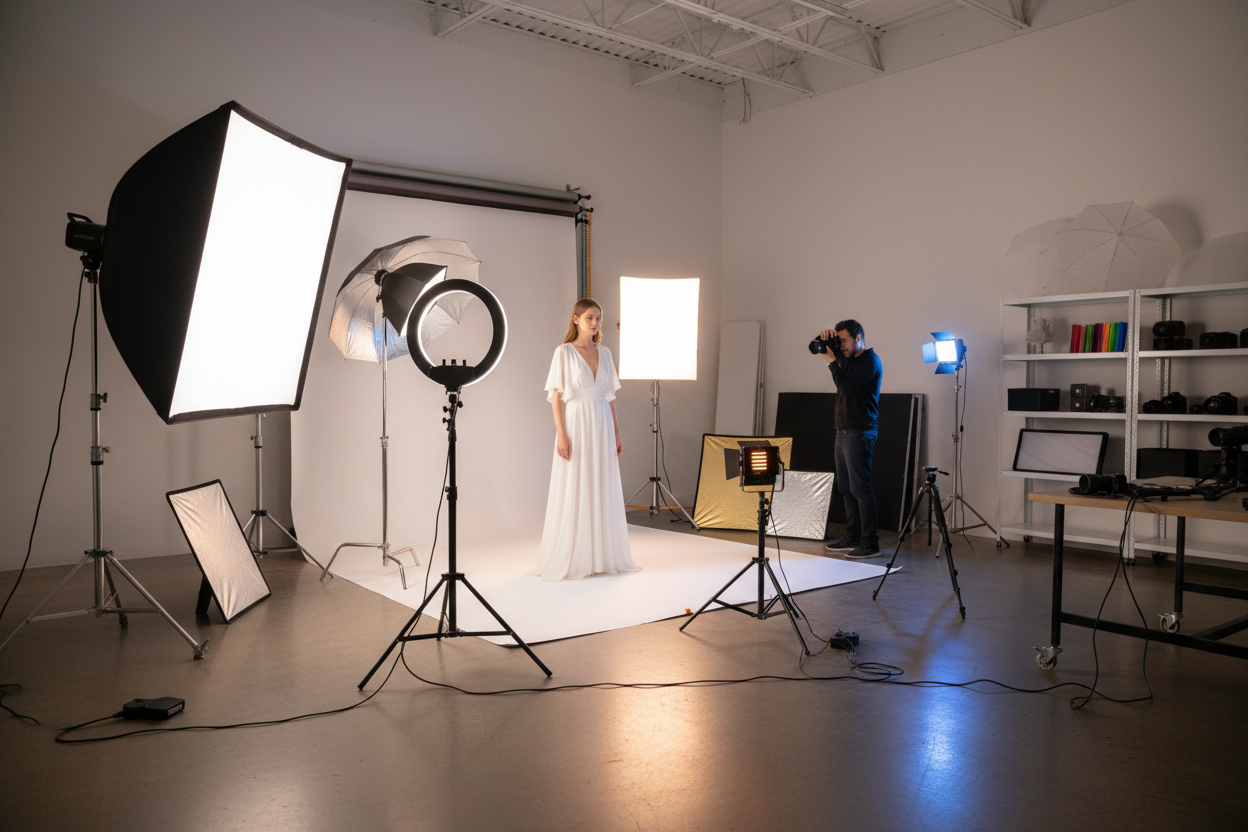
A photography lighting kit is a collection of light sources with accessories designed to control and shape lighting for your subject. Standard kits often include:
- Key light: The main light that creates shape and texture.
- Fill light: Balances shadows created by the key light for evenness.
Modifiers like softboxes, reflectors, umbrellas, and diffusers are essential to refine the quality, softness, and direction of light. Investing in a kit lets you control shadows, highlights, depth, and mood—key elements that elevate professional photography and videography.
2. Types of Photography Lighting: Flash vs. Continuous LED
Flash Lighting
Flash lighting delivers intense, brief bursts of light, typically through studio strobes or battery-powered speedlights. This makes it ideal for freezing motion and producing sharp, high-quality stills.
Benefits of Flash Lighting:
- Extremely high power output enables fast shutter speeds and shallow depth of field.
- Precise control using modifiers like softboxes, grids, and snoots.
- Excellent for motion freezing in fast-action photography.
Popular Flash Units:
- Godox AD300Pro — 300Ws, wireless control, compact and versatile.
- Profoto B10X Plus — 500Ws, Bluetooth, built-in modeling lamp for professional use.
- Neewer Q6 Flash — 600W portable flash with app compatibility and Bowens mount.
Drawbacks: Needs wireless triggers for off-camera use, no live lighting preview, and not ideal for video.
Continuous LED Lighting
Continuous LED lights provide steady illumination, perfect for both stills and video shooting. They allow you to see lighting effects in real time and are essential for content creators involved in livestreaming and vlogging.
Advantages of Continuous LED Lighting:
- Live preview lets you adjust on the spot.
- Optimized for video applications with cooler, quieter operation.
- High CRI ratings (97+) preserve accurate colors and natural skin tones.
- Portable design, battery-powered options, and app controls enhance usability.
Recommended LED Models:
- Rotolight AEOS 2 — 16.7 million colors, touch interface, suitable for video and stills.
- Zhiyun Molus G200 — Quiet COB LED, 200W–300W power on battery.
- Litemons LA150D — 190W COB LED with app controls, great for portable setups.
- Neewer RL45B Ring Light — 18-inch ring light with dimmable brightness and color temperature.
Limitations: Less power output than flashes, less effective at freezing motion, and top-tier models are costly.
3. Key Accessories to Complete Your Photography Lighting Kit
Great lighting setups rely on accessories for control and finesse.
Light Modifiers
- Softboxes: Soften harsh light for flattering portraits and product shots.
- Umbrellas: Versatile and quick for diffuse or reflective lighting.
- Reflectors: Redirect light to fill shadows subtly without additional power.
- Beauty Dishes: Create soft yet contrasted lighting, ideal for fashion.
- Snoots & Grids: Focus and shape light into precise highlights or accents.
Wireless Triggers
To fire off-camera flash units remotely, reliable RF triggers are essential for flexibility and freedom.
Stands and Mounts
Strong, adjustable stands and boom arms help position lights precisely and safely, reducing clutter and increasing creative options.
4. Best Practices for Indoor Lighting
Indoor shoots provide control but require thoughtful approach to avoid flat or unnatural images.
- Use a two-light setup: a strong key light with a softer fill light.
- Experiment with angles to sculpt depth and form.
- Employ softboxes or umbrellas for even, flattering light.
- Avoid harsh direct flashes to keep portraits natural.
- Combine flash or LED with ambient daylight where possible for lively, realistic effects.
5. Portable Lighting Solutions for On Location
Battery-powered flash units and compact modifiers make on-the-go lighting practical and professional.
- Speedlights like the Godox V1 are popular for their wireless, rechargeable design ideal for events and travel.
- A simple two-flash setup with modifiers can match studio-quality results outdoors.
- Complete your kit with wireless triggers and collapsible reflectors for ultimate versatility.
6. Lighting for Social Media: Ring Lights and LED Panels
Ring Lights
Ring lights deliver even, flattering light that minimizes shadows while creating a distinctive catchlight in the eyes. Ideal for selfies, video calls, and makeup tutorials.
- Entry-level options like Yarrashop Desk Ring Light (~$35) suit casual desktop use.
- Advanced models like Neewer RL45B offer app control, adjustable brightness, and color temperature.
LED Panels
LED panels provide soft, consistent light ideal for product demos, lifestyle videos, and creative mood lighting with millions of color options and high CRI for true-to-life color reproduction.
7. How to Build Your Own DIY Lighting Kit
DIY kits allow maximum customization and adaptability without unnecessary extras.
- Start with two battery-powered flash units such as Godox AD300Pro or Neewer Q6.
- Add compatible light modifiers like softboxes or umbrellas tailored to flashes.
- Include a reliable wireless trigger system.
- Use collapsible reflectors or diffusers for versatile light control.
- Opt for durable, adjustable light stands or boom arms to complete your setup.
This modular approach gives you room to upgrade as your skills grow.
8. Understanding Color Rendering and Diffusion in Lighting
What Is CRI and Why It Matters
The Color Rendering Index (CRI) measures how accurately a light source reveals colors compared to natural daylight. A CRI of 97+ ensures:
- True-to-life skin tones in portraits
- Faithful color representation for product photography
- Reduced eye strain during long shoots or video calls
The Power of Diffusion
Diffusers spread light evenly, softening shadows and creating a natural, flattering glow. They enhance image quality and help your subjects feel comfortable under bright lighting.
9. Choosing Between Flash and Continuous Lighting: What’s Best for You?
| Factor | Flash Lighting | Continuous LED Lighting |
|---|---|---|
| Power | Extremely high; handles all lighting needs | Moderate; suitable for most setups |
| Control | Precise shaping; requires triggering gear | Visual feedback in real-time |
| Ideal For | Still shots, action, detailed portraits | Video, streaming, lifestyle demos |
| Setup Complexity | More advanced; sync with camera needed | User-friendly, plug-and-play |
| Portability | Battery options available; heavier overall | Lightweight, great for travel |
| Cost | Pricier, especially with accessories | Broad range; affordable entry kits |
| Color Quality | Good with modifiers | Excellent CRI and color control |
Many photographers combine both: flashes for stills and action, LEDs for smooth video workflows.
10. Final Thoughts: Building the Ideal Photography Lighting Setup
A well-considered lighting kit unlocks new creative possibilities, letting you craft images and videos with professional polish.
- Use multiple light sources to sculpt form and mood.
- Employ modifiers to shape quality and ambiance.
- Integrate flash with natural light indoors for dynamic portraits.
- Choose LEDs for video, live streaming, and content creation.
- Leverage ring lights for quick, flattering facial illumination.
- Consider DIY kits for tailored solutions and budget flexibility.
Understanding your lighting tools and how to apply them is the foundation of compelling visual storytelling. Elevate your work by exploring the lighting options that best fit your style and needs.
FAQ
What is the difference between flash and continuous lighting?
Flash lighting delivers brief, intense bursts ideal for freezing motion and high power output, primarily for still photography. Continuous lighting provides steady illumination, offering live previews and better suitability for video and streaming.
Do I need light modifiers with my lighting kit?
Yes, modifiers like softboxes, umbrellas, and reflectors are critical to control light softness, direction, and quality, helping you achieve professional-looking images.
Are ring lights good for portrait photography?
Ring lights provide even, direct illumination that reduces shadows and creates flattering catchlights—excellent for portraits, selfies, video calls, and makeup tutorials.
Can I build my own lighting kit?
Absolutely. A DIY kit allows customization with selected flash units, modifiers, triggers, and stands. This approach often saves money and can evolve with your needs.
What does CRI mean and why is it important?
CRI (Color Rendering Index) measures how accurately a light displays colors compared to natural daylight. A high CRI (97+) ensures true-to-life skin tones and product colors, essential for professional-quality imaging.
To explore some of the best lighting kits available on the market, visit Digital Camera World's Best Photography Lighting Kit Guide.