Cart
0
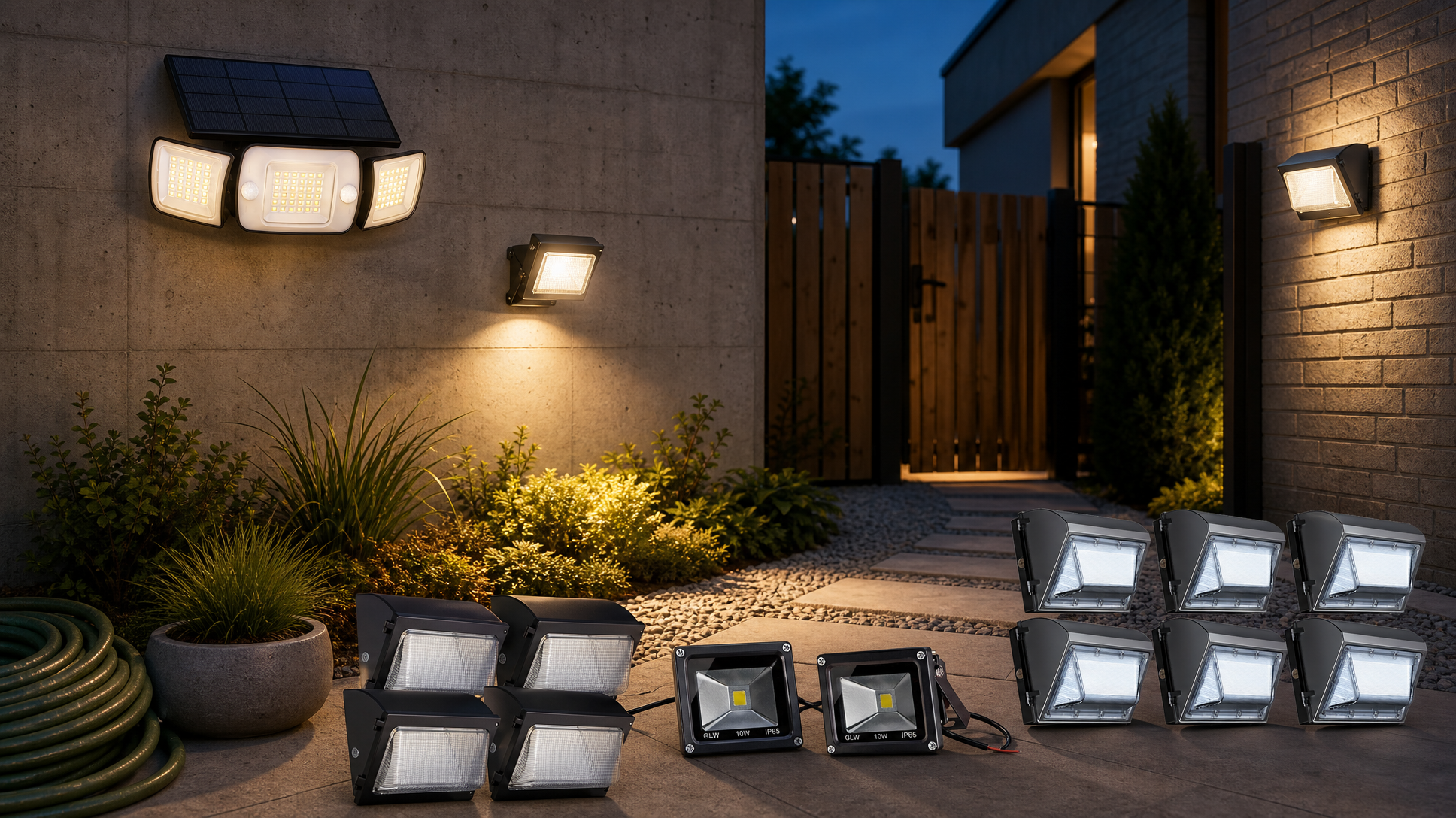
Most people walk into this decision already confused. They search for a "security light," end up on a page full of flood lights, and just pick whichever one has the most reviews. Sometimes that works out. Often, they end up with a blazing fixture that runs all night, or a motion sensor that triggers every time the neighbor's cat walks by.
The terms get used interchangeably everywhere — product listings, home improvement forums, even manufacturer packaging. But flood lights and security lights actually do different jobs. Getting clear on that difference is the fastest way to stop second-guessing yourself and just buy the right thing.
What a Flood Light Actually Is
A flood light is defined by its beam — wide, broad, and designed to wash a large area with light. That's it. The term doesn't say anything about whether it's on a timer, connected to a sensor, or running all night. A flood light is a description of the optics, not the behavior.
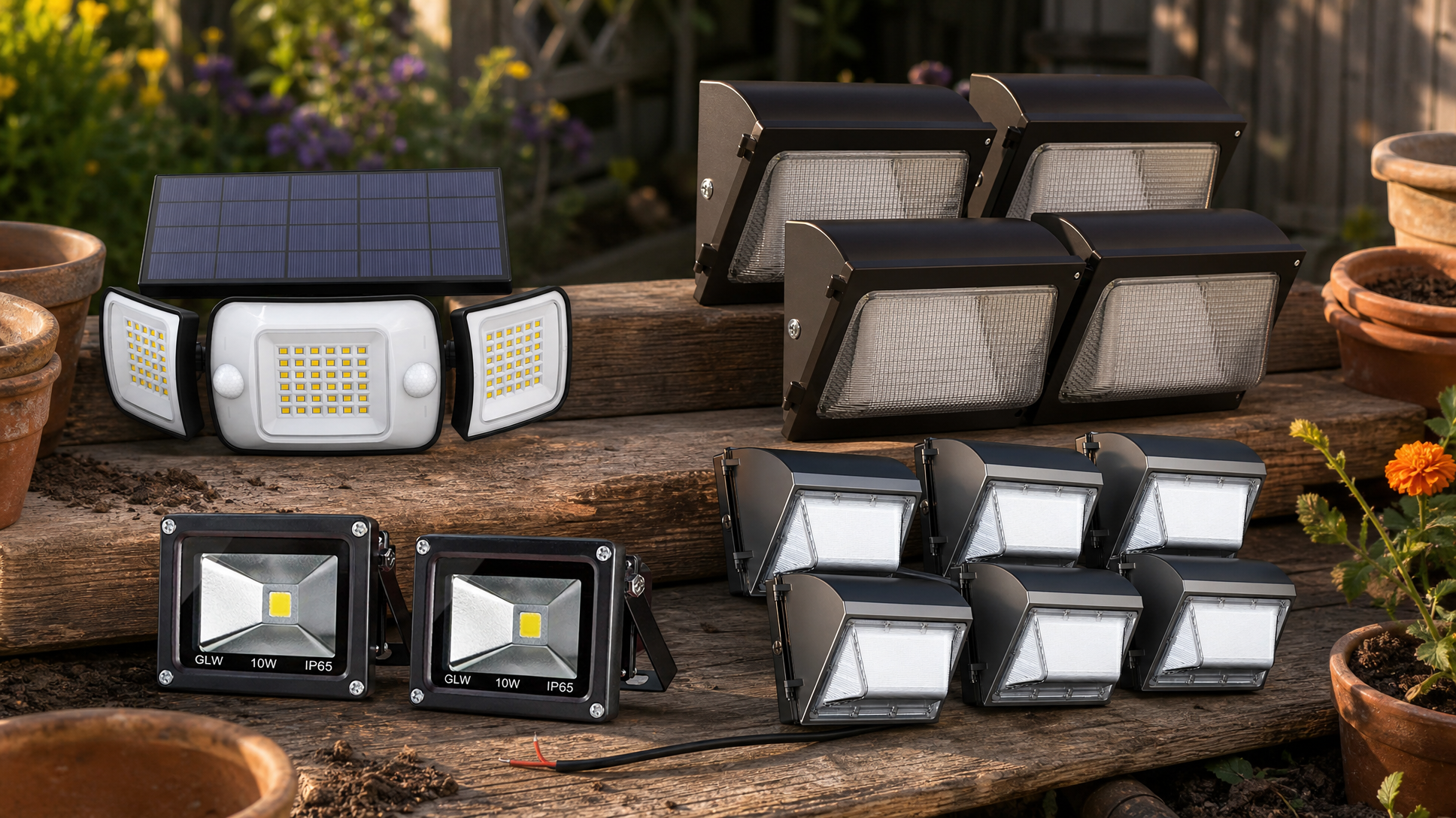
The GLW LED Flood Light 10W 2 Pack is a clean example of this. It's a compact, gray aluminum unit with a single COB LED chip, an adjustable bracket mount, and bare lead wires for hardwired installation — rated IP65, so rain and dust aren't a concern. At 10W and 750 lumens per unit, it puts out a focused wash of warm white light, which makes it well-suited for illuminating garden beds, the base of trees, a small patio, or an architectural feature you want to highlight after dark. It runs on 12V AC/DC, which also makes it compatible with low-voltage landscape lighting setups.
What it doesn't do: it won't turn itself on when something moves. It doesn't "detect" anything. You wire it in, set it on a timer or a switch, and it lights whatever you point it at. That's the job of a flood light — reliable, steady illumination of a specific zone.
What a Security Light Actually Is
A security light is a flood light with a brain. The core function — broadcasting wide-angle light — is the same. What's added is some form of trigger: usually a passive infrared (PIR) motion sensor, sometimes a dusk-to-dawn photocell, sometimes both. The light responds to activity rather than just staying on.
That reactive behavior is what makes it a security tool. A light that flicks on the moment something moves across your driveway does two things: it startles anyone who wasn't expecting it, and it signals that the property is actively monitored. A light that's just on all night becomes background noise — people stop noticing it.
The intelamp Solar Outdoor Lights (Model 12A-CA) is a good illustration of this. It's a black, wall-mounted unit with three independently adjustable LED flood heads and a large solar panel mounted above — a genuinely wide 270° coverage angle. It has motion sensors built into the fixture body and charges via solar during the day, so there's no wiring involved at all. You mount it, angle the heads, and it handles the rest: charging through daylight, activating on motion after dark. That combination of solar power and motion-triggered response makes it a practical security light for locations where running a cable isn't realistic — a detached garage, a side gate, a garden shed.
The Real Question: Which Problem Are You Solving?
Here's the clearest way to think about it:
- If you need light to see by — to safely navigate a path, to illuminate a work area, to highlight landscaping — a flood light running on a timer is usually the right call. Constant, predictable light for a defined zone.
- If you need light to deter or detect — to discourage someone from approaching, to alert you when something moves, to avoid lighting an area unnecessarily all night — a security light with motion sensing is the better fit.
The two aren't mutually exclusive. A back patio might need both: steady ambient flood lighting for evenings you're actually using it, plus a motion-triggered unit covering the perimeter. Many properties end up with a mix.
Where Wired Wall Packs Fit In
For commercial properties, parking lots, warehouse perimeters, and the exterior walls of larger buildings, neither a small landscape flood light nor a solar security light is the right scale. That's where LED wall pack fixtures come in.
The Hyperlite 120W LED Wall Pack Light (4 Pack) and the Aphyni 130W LED Wall Pack Light (8 Pack) sit in this category. Both are dark bronze, heavy-duty wall-mounted fixtures with textured prismatic lens covers — built for continuous outdoor commercial use. The Hyperlite pack delivers 15,600 lumens per unit; the Aphyni units reach 19,500 lumens each and include a dusk-to-dawn photocell sensor, so they switch on automatically at nightfall and off at dawn without any manual control or timer programming.
At that output level, these aren't accent lights or garden fixtures — they're perimeter security and safety lighting for spaces that need consistent, high-intensity coverage through the night. The Aphyni's built-in dusk-to-dawn function and IP65 waterproof rating make it a low-maintenance choice for properties that need reliable coverage without someone managing a switch.
A Practical Summary Before You Buy
The label on the box matters less than what the fixture actually does. Before you buy anything, answer two questions: Do I need the light to react to movement, or just stay on? And what area am I trying to cover, and how much light does that actually require?
A 10W landscape flood light is perfect for a garden bed. It would be laughably underpowered for a commercial parking lot. A solar motion-sensor unit is ideal for a detached outbuilding with no power run — and completely unnecessary if you already have hardwired power and just need steady illumination.
Match the fixture to the job, not the other way around.
Browse the full range of security and flood lights at LightsDaddy to find the right fit for your property — from compact landscape floods to high-output commercial wall packs.
Frequently Asked Questions
Can I use a flood light as a security light?
You can, but only if you add an external motion sensor or put it on a smart timer. A bare flood light has no detection capability on its own — it just stays on whenever it has power. If you want reactive behavior (light turns on when something moves), you either need a fixture with a built-in sensor or a separate sensor module wired into the circuit.
Are solar security lights reliable enough for year-round use?
It depends on your location and how much direct sunlight the panel gets. Solar lights like the intelamp 12A-CA work well in areas with consistent sun exposure. In regions with long cloudy winters or heavily shaded mounting locations, solar panels may not recharge fully, which can reduce how long or how brightly the light runs after dark. For those situations, a hardwired fixture is more dependable.
What does IP65 mean on an outdoor light?
IP65 is an international protection rating. The "6" means the fixture is fully dust-tight, and the "5" means it's protected against water jets from any direction — so rain, garden hose spray, and similar exposure won't damage it. It's a solid rating for most outdoor applications. It doesn't mean the fixture can be submerged, but for wall-mounted or ground-level outdoor use, IP65 is more than sufficient.
How many lumens do I need for outdoor security lighting?
It varies significantly by the size and purpose of the area. A small garden path or accent feature might only need a few hundred lumens. A residential driveway or backyard typically calls for somewhere in the range of 1,000–3,000 lumens. Large commercial perimeters, parking areas, or building exteriors generally require fixtures in the tens of thousands of lumens — which is the territory that high-output wall packs like the Hyperlite and Aphyni units are designed for. Start by measuring the area you need to cover and work backward from there.